Streamlining Your Guitar Setup: Hardware vs Software
- Audio Tools
- by Bruno Bontempo
Discover how to downsize your guitar rig without losing tone. Learn how to downsize your hardware and build a flexible, professional setup using the Reason Rack and modern plugins.
Our articles may include affiliate links and we may earn a commission. Here how it works.
For decades, the electric guitar has been defined by the physical weight of the gear behind it.
To the traditionalist, the guitar rig was a rigid, heavy, and often temperamental ecosystem of vacuum tubes, magnetic speakers, and miles of copper wiring. If you wanted a different sound, you bought a different box. If you wanted to record that sound, you spent hours wrestling with microphone placement and room acoustics.
However, we are currently living through a fundamental shift in how guitarists approach their craft. Hardware is king, but the modern musician is increasingly asking a difficult question: Is the friction of my hardware setup getting in the way of my music?
In this guide, we will break down the hardware vs. software debate, explore the “hybrid” middle ground, and look at why the Reason Rack has become a secret weapon for guitarists looking to downsize without losing the soul of their tone.
The Physical Philosophy: Why We Cling to Hardware
Before we look at streamlining, we must respect why hardware became the standard.
A guitar amplifier isn’t just a speaker; it is an instrument in itself. The way a tube sag occurs when you hit a power chord, or the physical “thump” of a closed-back 4×12 cabinet, creates a tactile feedback loop.
The Zero-Latency Experience
The Interface of Inspiration
The Downside: The Weight of Tradition
The friction begins when the gear leaves the stage and enters the studio.
Traditional hardware setups are volume dependent, most tube amps have a “sweet spot” that is physically painful to be near in a home studio.
They’re also logistically heavy, a full touring rig is a nightmare for the independent creator, aside from being maintenance intensive: Vintage gear is beautiful until a transformer blows or a patch cable develops an intermittent hum.
The Software Evolution: Complexity Without the Clutter
Software has spent thirty years trying to catch up to the “feel” of hardware. Early digital simulations were often criticized for being “sterile” or “fizzy.” But the modern era of modeling and sound design has changed the conversation entirely.
When we talk about software for guitarists today, we aren’t talking about “imitations.” We are talking about flexible environments.
Software like Reason 13 doesn’t just give you a “sound”; it gives you a virtual architecture that behaves like a professional studio rack.
In a hardware setup, if you find the perfect lead tone but need to tweak the rhythm track two weeks later, you better hope you took a photo of your knobs and marked the floor where the mic was.
In the Reason Rack, every single parameter, from the gain on the amp to the routing of the delay, is saved. You can return to that exact moment of inspiration with one click.
This is the biggest workflow shift. Traditionally, once you mic an amp and record the track, that tone is “baked in.” If you decide later that it’s too distorted, you have to re-record.
With software solutions, you record a “dry” signal. You can change the entire amp model, swap the cabinet, or move the virtual microphone after the perfect performance has been captured.
The Reason Rack: A Guitarist’s Modular Playground
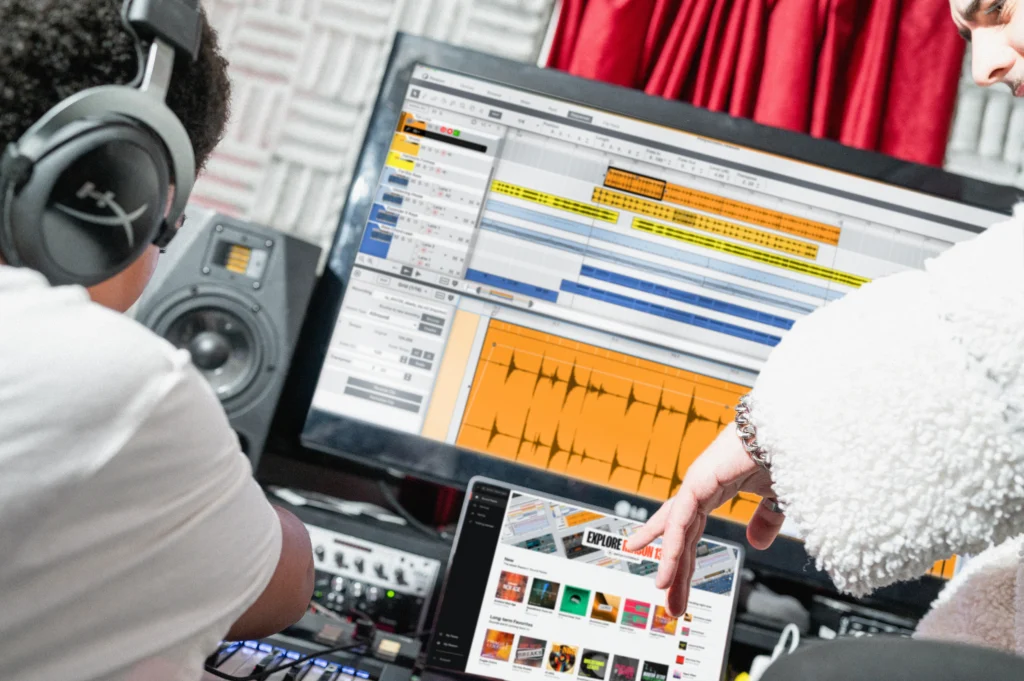
For artists who love the “gear-head” aspect of hardware, Reason is often the software that finally clicks. While most software feels like a spreadsheet, the Reason Rack feels like a studio.
Visual Routing and the "Flip"
One of the most hardware-centric features of Reason is the ability to “flip the rack.” By pressing Tab, you see the back of the devices. You see the virtual 1/4″ cables and CV (Control Voltage) inputs.
For a guitarist, this is intuitive. You understand signal flow. You know what happens when you plug a distortion pedal into a delay.
In the Reason Rack, you can experiment with routing that would be impossible or dangerous in the real world, like using a synth’s LFO to modulate the gain of your guitar amp.
Devices with Character
At Reason Studios, the philosophy is that software should be a “labor of love.” The devices aren’t just clinical algorithms; they are designed with personality.
The Softube Amp and Bass Amp are the core of the guitar experience in the rack, providing world-class emulations of classic “Marshall-style” and “Ampeg-style” tones. The Echo works as a high-character delay unit that mimics the pitch-shifting and grit of vintage tape echoes. Scream 4 is a legendary multi-mode distortion that has been a staple in professional studios for two decades.
Using the Reason Rack Plugin
You don’t have to switch your entire workflow to benefit from this.
The Reason Rack Plugin allows you to bring this modular power into any DAW, whether you use Ableton Live, Logic Pro, or Pro Tools.
It acts as the “guest that brings the party to another house,” giving you access to thousands of patches and devices without leaving your preferred recording environment.
How to Hybridize Your Setup
If you are looking to streamline your setup today, follow this roadmap to move from a hardware-heavy rig to a high-performance hybrid system.
1. The Audio Interface (The New "Front End")
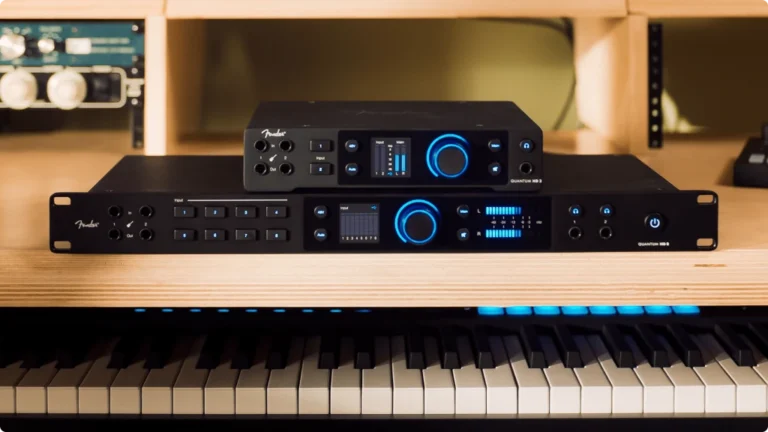
Your interface is now the most important piece of hardware you own. To get a great guitar tone in software, you need a High-Z (High Impedance) input. This ensures the signal from your pickups is converted accurately without losing high-end clarity.
2. The "Pedals-First" Hybrid Approach
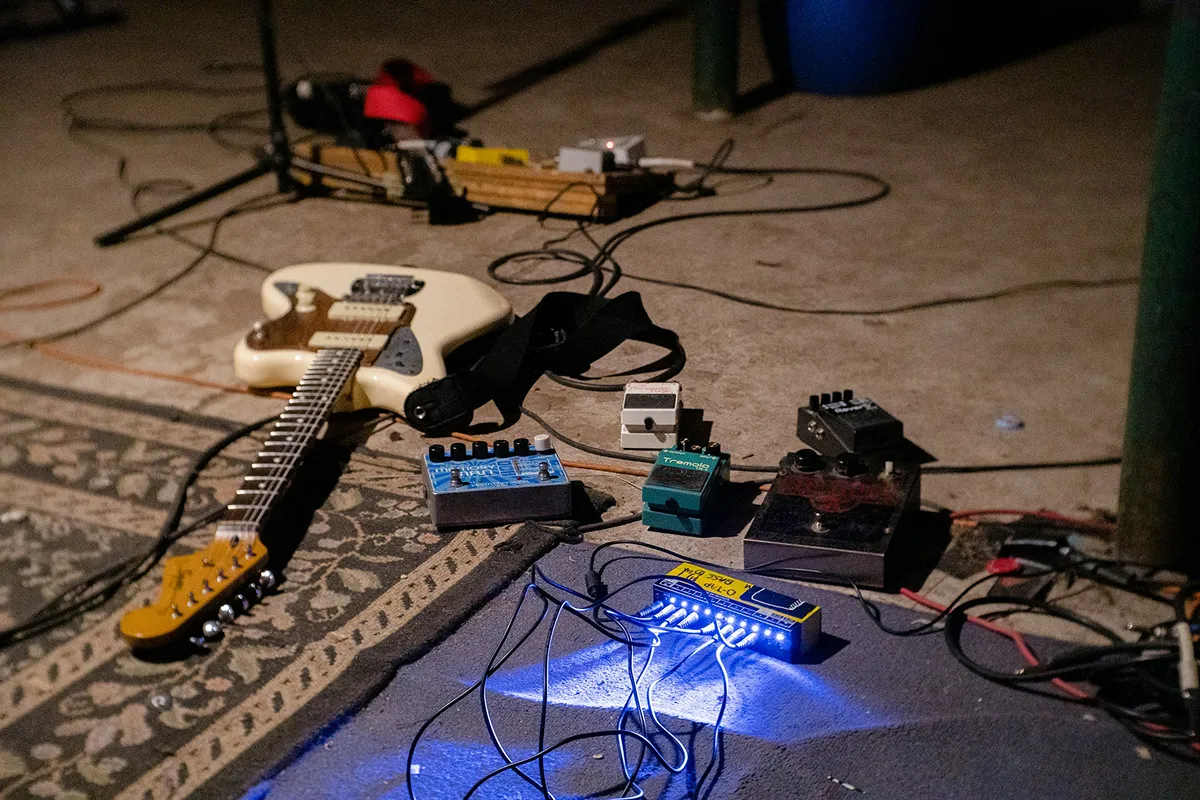
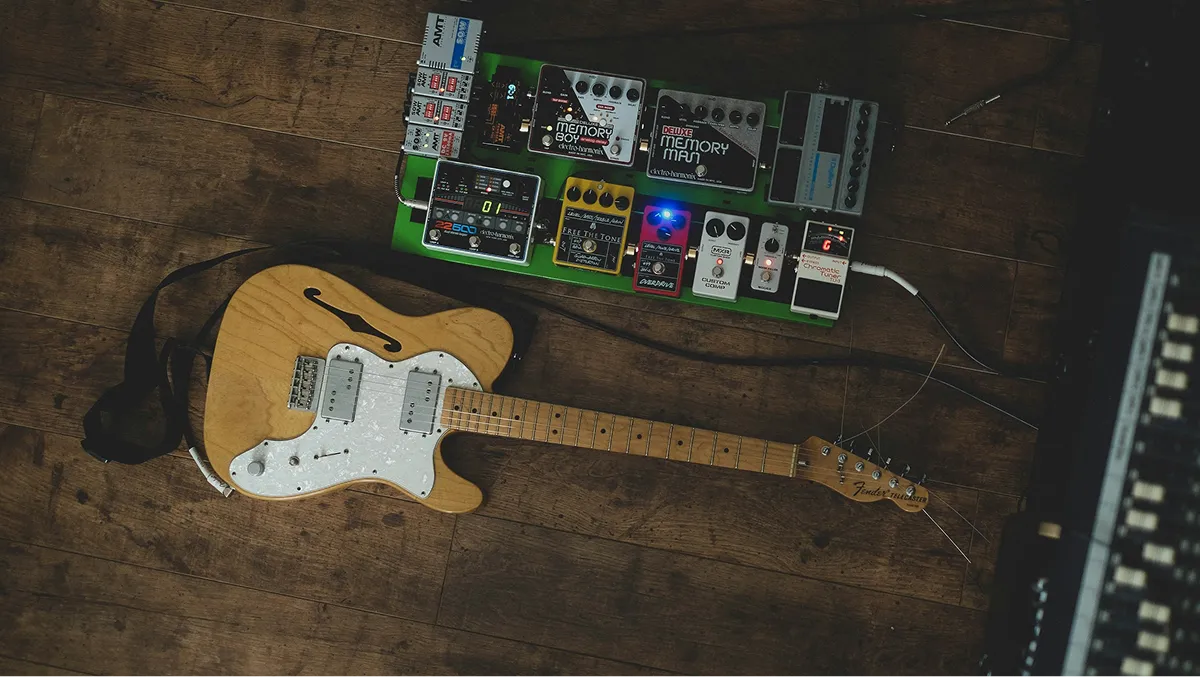
You don’t have to throw away your boutique pedals. In fact, many guitarists find that the best “streamlined” setup involves keeping their favorite physical drive and fuzz pedals on a small board, plugging those into their interface, and then using the Reason Rack for the “back end” (amps, cabs, and post-effects).
Why? Drive pedals often interact with your hands and volume knob in a way that is hard to replicate. The result is you get the tactile “stomp” of your favorite gear with the silent, flexible recording of software.
3. Implementing Cabinet IRs (Impulse Responses)
A huge part of the “hardware” sound is the speaker cabinet. In the Reason Rack, you can use devices like the RV7000 MkII to load Impulse Responses. These are digital “snapshots” of real speakers in real rooms. This allows you to “play” through a vintage 1960s cabinet without owning a warehouse to store it in.
Beyond the Pedalboard
Streamlining isn’t just about making things smaller; it’s about making them smarter. When you move into the software realm, you can solve problems that hardware guitarists have struggled with for years.
Parallel Processing Made Easy
In the physical world, running two amps at once (a “wet/dry” rig) requires expensive ABY switchers, isolation transformers to prevent ground loops, and twice as many microphones.
In the Reason Rack, creating a parallel rig is as simple as using a Spider Audio Merger/Splitter. You can send your guitar signal to a clean, compressed amp on the left and a heavily distorted, delayed amp on the right. This creates a massive, professional soundscape that would take hours to set up with hardware.
Creative Sound Design with "Players"
Reason 13 introduced “Players”, MIDI devices that can generate patterns and musical variation. While guitarists usually think in terms of “playing the strings”, you can use the Reason Rack to turn your guitar into a sound design tool.
Imagine taking a single sustained note from your guitar and using a Dual Arpeggio or Note Echo player to transform it into a rhythmic, pulsing texture. This is where the “software” solution moves beyond imitation and becomes a new form of instrument.
Competitive Analysis: Choosing Your Path
When we look at the return on investment for the modern guitarist, we have to weigh the initial cost, the setup speed, and the variety of tones available. Navigating these options requires a clear understanding of where your specific needs land.
The Full Hardware Rig: The Purist's Choice
The traditional path of the full hardware rig remains the gold standard for purists and those who primarily focus on live touring.
However, it comes with a very high initial cost, often ranging from $2,000 to over $10,000 for a professional-grade setup. The setup speed is notoriously slow, involving complex cabling, mic’ing, and level checking.
In terms of variety, you are largely fixed to what you own, if you have a British-voiced amp, that is your primary palette. Portability is the biggest hurdle here, often requiring a van just to move the essential pieces of the rig.
The Small Hybrid Rig: The Gigging Producer’s Middle Ground
A more modern approach is the small hybrid rig. This setup typically includes a few choice boutique pedals paired with a high-quality audio interface and software.
This represents a medium initial cost, usually between $500 and $1,500. The setup speed is significantly improved; it is a “plug and play” experience that gets you moving quickly. You gain a flexible tone variety by mixing physical pedals with software-based cabinet simulations.
This setup is highly portable, often fitting entirely within a single backpack, making it the ideal choice for gigging producers.
All-Software Solutions: The Power of Reason
For home studios and composers, the all-software approach, powered by tools like Reason 14, offers the most streamlined experience.
The initial cost is incredibly low, particularly with a Reason+ subscription at $19.99/month. Setup speed is essentially instant, as you are simply loading patches and presets within your DAW. The variety is virtually infinite, giving you access to over 200 devices and thousands of sounds.
This rig fits on a laptop, allowing you to create world-class guitar tones anywhere in the world without any physical footprint.
The Growth Mindset: Why Momentum Over Friction Wins
In the music world, friction is the enemy of the hit.
Every minute you spend troubleshooting a crackling cable or trying to find the sweet spot on a microphone is a minute you aren’t writing music. The primary reason to streamline your setup is to protect your creative flow. Reason Studios caters to the explorer, the musician who asks “What if?”.
In a hardware-only world, these questions are expensive and time-consuming. In the Reason Rack, they are two mouse clicks away. This freedom to experiment is what leads to a “signature sound.”
Respect the Past, Embrace the Future
Streamlining your guitar setup isn’t a betrayal of the instrument’s heritage. It is an evolution. By moving toward a more software-integrated workflow, you aren’t losing tone, you are gaining time.
Whether you choose to go entirely “in the box” with Reason or keep a small, curated selection of hardware pedals in a hybrid setup, the goal remains the same: make and release your best music.
The wall of 4×12 cabinets looks great in a photo, but a streamlined, modular rack that allows you to create whenever inspiration strikes? That is what gets your music heard.

| ALSO REVIEWED