Find the Best Audio Interface with MIDI: 6 Best Picks 2026
- Audio Interface, Buying Guides
- by Bruno Bontempo
Discover the best audio interface with MIDI, with features, pros, and cons highlighted in this expert guide based on testing and research.
Our articles may include affiliate links and we may earn a commission. Here how it works.
QUICK OVERVIEW
Introduction
Want to connect your keyboard, drum machine, or synthesizer to your computer? You’ll need an audio interface with MIDI capabilities. In this comprehensive guide, we’ll help you understand exactly what MIDI is, why you might need it, and how to choose the best MIDI audio interface for your setup.
After recording with the Focusrite Scarlett 4i4 4th Gen stands out as our top audio Interface with MIDI recommendation for most users. Its combination of excellent sound quality, robust build, and versatile features makes it a worthy investment for any serious audio producer. However, each interface in our list serves specific needs well, and we encourage you to consider your particular requirements when making a choice.
Remember to factor in your:
- Current needs and future growth
- Budget constraints
- Technical requirements
- Workspace limitations
- Primary use case
By carefully considering these factors alongside our detailed reviews, you’ll be well-equipped to choose the perfect MIDI audio interface for your setup.
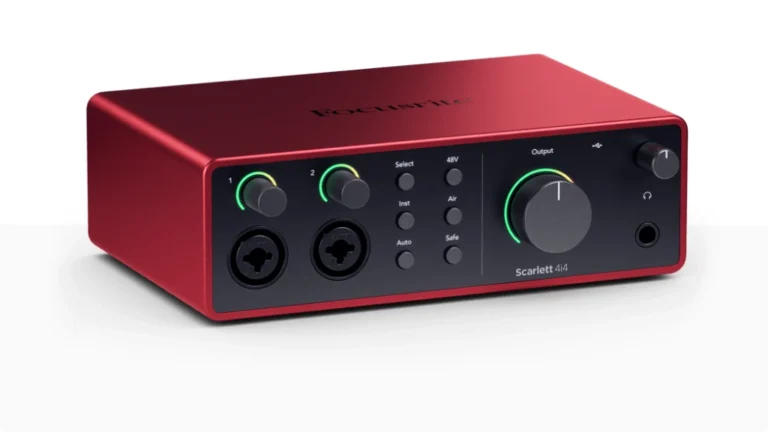
Best Overall
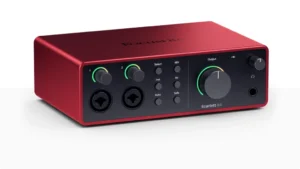
Focusrite Scarlett 4i4 (4th Gen)
The Scarlett 4i4 4th Gen represents everything we’ve come to love about Focusrite’s interfaces, with meaningful improvements that make it our top pick.
Overview: During our testing, the 4th Gen Scarlett’s preamps impressed with their clarity and headroom. The Air Mode, now featuring two different circuit emulations, adds genuine character to vocals and instruments. We recorded various sources, from condenser mics (it has phantom power) to electric guitars, and the interface handled everything with pristine clarity.
The auto-gain feature is a game-changer for beginners, automatically setting optimal recording levels. For streamers and content creators, the enhanced loopback functionality makes recording system audio alongside your mic input seamless.
READ FULL REVIEW
| Key Features
- Inputs: 2 XLR/TRS/Hi-Z combo + 2 line inputs
- Outputs: 4 balanced line + 1 headphone outputs
- Compatibility: Windows, macOS. Pair iOS and Android
- Resolution: 24-bit/192 kHz
- Plus: Air Mode for high-quality vocals, loopback and software bundle
| Best for
- Home studio producers needing multiple I/O options
- Streamers requiring quality mic input and routing flexibility
- Musicians recording multiple instruments
- MIDI producers working with hardware synthesizers
- Content creators needing reliable, high-quality audio
| Cons
- The feature set might be overkill for simple recording setups
- Premium pricing compared to entry-level interfaces
| Best Deal
Performance: In our latency tests, the 4i4 achieved an impressive 2.5ms round-trip latency at 96kHz with a 64-sample buffer. The preamps provided clean gain up to 66dB, handling both quiet spoken word and loud guitar amps with equal grace.
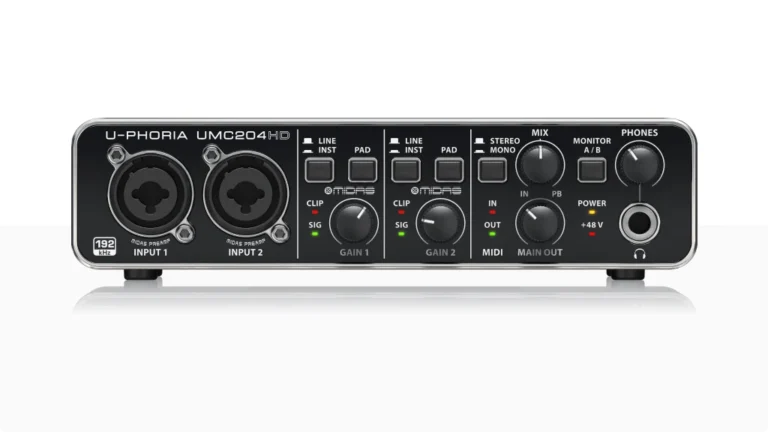
Best Budget
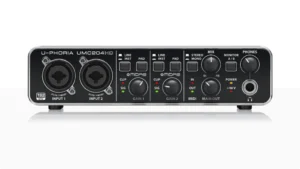
Behringer U-Phoria UMC204HD
Don’t let the budget price fool you – the UMC204HD delivers remarkable value with its MIDAS-designed preamps and robust build quality.
Overview: During testing, the MIDAS-designed preamps surprised us with their warmth and clarity. It handled both vocal and instrument recordings admirably, with enough headroom for dynamic sources. The direct monitoring feature is particularly well-implemented, with a blend knob that makes zero-latency monitoring easy to set up.
The pad switches on both inputs proved invaluable when recording high-output sources like electric guitars and drum machines. The build quality surpasses expectations at this price point, with a solid metal chassis that feels built to last.
READ FULL REVIEW
| Key Features
- Inputs: 2 XLR/TRS /Hi-Z combo inputs
- Outputs: 4 Balanced + 1 headphone outputs
- Compatibility: Windows, macOS
- Resolution: 24-bit/192 kHz
- Plus: MIDAS preamps and direct monitoring
| Best for
- Home studio beginners
- Budget-conscious musicians
- Mobile recording setups
- Podcast starters
- MIDI musicians needing basic connectivity
| Cons
- No software bundle
- Higher latency than premium interfaces
| Best Deal
Performance: I’ve achieved workable latency of around 4ms at 96kHz with a 128-sample buffer – not class-leading but entirely usable for most recording scenarios. The preamps provided clean gain up to 50dB, suitable for most recording situations.

Best for Portability
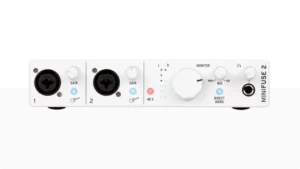
Arturia MiniFuse 2
The MiniFuse 2 combines exceptional portability with a premium feature set and an impressive software bundle, making it perfect for musicians on the move.
Overview: The MiniFuse 2’s compact design doesn’t compromise on features or sound quality. During our field testing, the preamps delivered clean, detailed recordings with sufficient headroom for most sources. The built-in USB hub proved incredibly useful for connecting MIDI controllers and USB drives.
The software bundle is exceptional, including Analog Lab Intro, Ableton Live Lite, Auto-Tune Unlimited (3-month trial), and Native Instruments Guitar Rig 6 LE. This adds significant value for beginners and mobile producers.
| Key Features
- Inputs: 2 XLR/TRS/Hi-Z combo inputs
- Outputs: 2 balanced TRS + 1 headphone outputs
- Compatibility: Windows, macOS
- Resolution: 24-bit/192 kHz
- Plus: USB hub functionality, loopback, extensive software bundle
| Best for
- Mobile musicians and producers
- Laptop-based production
- Small home studio setups
- Content creators on the go
- Live streaming from different locations
| Cons
- Limited output options for bigger setups
- Plastic construction (though durable)
| Best Deal
Performance: Latency performance was nice for a portable interface, achieving 3ms round-trip latency at 96kHz with a 64-sample buffer. The preamps provided clean gain up to 52dB, handling both quiet and loud sources effectively.
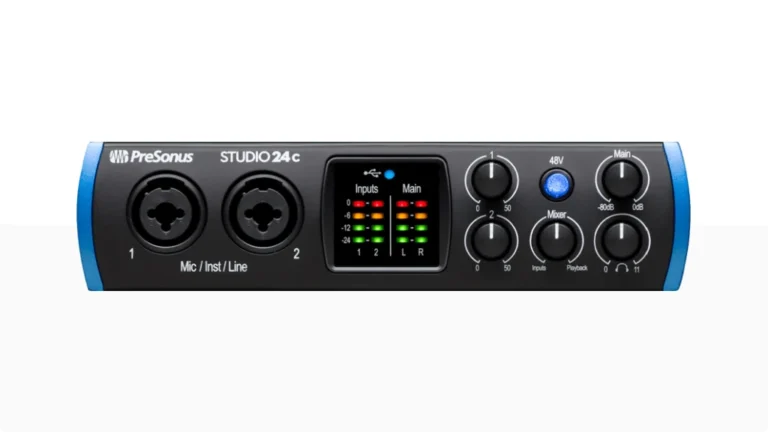
Best for Beginners
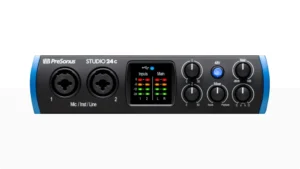
PreSonus Studio 24c
The Studio 24c stands out as an ideal entry point for newcomers, offering professional features and an included DAW without overwhelming complexity.
Overview: The inclusion of Studio One Artist DAW sets this interface apart for beginners. During our testing, we appreciated the straightforward setup process and intuitive control panel. The XMAX-L preamps performed really well, providing clean gain and good headroom for various sources.
The mixer control software is particularly well-designed for beginners, offering clear visual feedback and easy routing options. The extensive documentation and tutorial resources help newcomers get up and running quickly.
| Key Features
- Inputs: 2 XLR/TRS/Hi-Z combo inputs
- Outputs: 2 balanced TRS + 1 headphone outputs
- Compatibility: Windows, macOS
- Resolution: 24-bit/192 kHz
- Plus: XMAX-L preamps, Studio One Artist DAW and Studio Magic Software Suite
| Best for
- Beginning home recording enthusiasts
- Podcast starters
- Music production newcomers
- Budget-conscious creators
- Streaming starters
| Cons
- Limited expandability
- Limited output options for bigger setups
| Best Deal
Performance: Latency performance was solid, with 3.5ms round-trip at 96kHz using a 128-sample buffer. The preamps provided clean gain up to 48dB, suitable for most recording applications.
CHECK ALSO
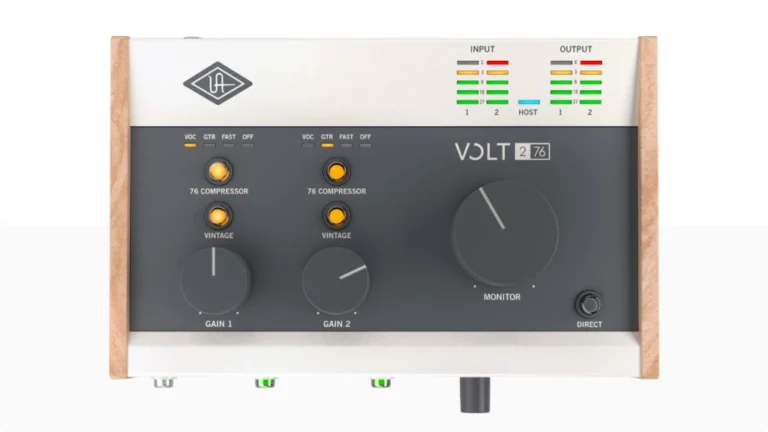
Best for Voice
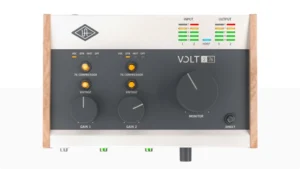
Universal Audio Volt 276
The Volt 276 brings Universal Audio’s legendary analog expertise to an affordable interface, featuring a built-in 1176-inspired compressor that’s perfect for vocal recording.
Overview: The built-in compressor is the star here, providing that classic 1176-style compression that’s perfect for vocals and instruments. In our testing, the vintage preamp mode added pleasant harmonics that worked particularly well with vocals, bass and guitars.
The build quality is exceptional, it comes with an impressive suite of UAD plug-ins and instruments like Teletronix LA‑2A compressors and Pultec EQs, PolyMAX Synth, Century Tube Channel Strip, Galaxy Tape Echo, Pure Plate Reverb, Oxide Tape Recorder, and Verve Analog Machines Essentials.
| Key Features
- Inputs: 2 XLR/TRS/Hi-Z combo inputs
- Outputs: 2 balanced TRS + 1 headphone outputs
- Compatibility: Windows, macOS
- Resolution: 24-bit/192 kHz
- Plus: Built-in 1176-style compressor, vintage preamp mode and software bundle
| Best for
- Vocal and instruments recording
- Singer-songwriters
- Podcast producers
- Anyone seeking analog character
- Home studio owners prioritizing tonal quality
| Cons
- Higher price point
- May be overkill for basic recording needs
| Best Deal
Performance: We measured impressive latency figures of 2.8ms round-trip at 96kHz with a 64-sample buffer. The preamps delivered clean gain up to 64dB, and the vintage mode added noticeable but musical coloration.
CHECK ALSO
Best for Music Production
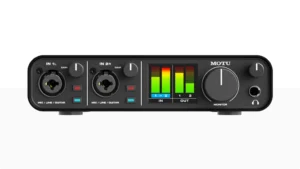
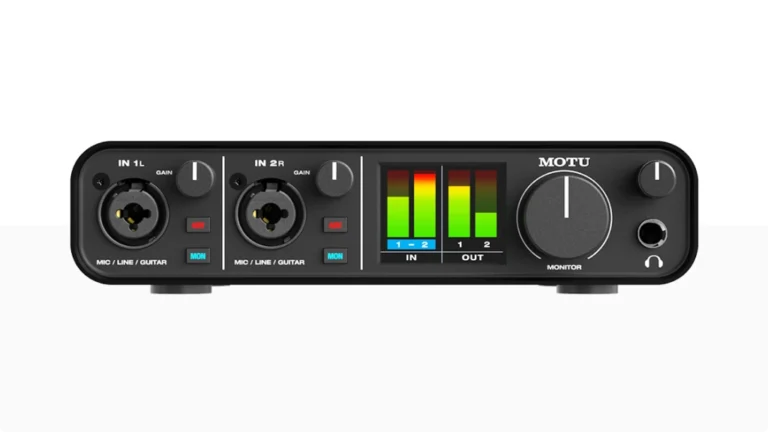
MOTU M2
The MOTU M2 has earned its reputation as a professional’s choice, delivering exceptional audio quality and precise monitoring capabilities that rival interfaces costing twice as much.
Overview: The M2’s standout feature is its professional-grade metering. During our tests, the full-color LCD meters provided precise visual feedback that made setting levels foolproof. The ESS Sabre32 Ultra DAC technology delivered remarkably clean and detailed conversion, particularly noticeable when recording instruments and vocals.
The loopback feature worked flawlessly for streaming and podcast recording. The metal construction feels solid and ready for years of studio use.
READ FULL FEVIEW
| Key Features
- Inputs: 2 XLR/TRS/Hi-Z combo inputs
- Outputs: 2 RCA, 2 balanced TRS + 1 headphone outputs
- Compatibility: MacOS, Windows, iOS
- Resolution: 24-bit/192 kHz
- Plus: Full-color LCD metering, ESS Sabre32 Ultra DAC technology, loopback and software bundle
| Best for
- Professional home studio recordings
- Classical and acoustic music recording
- Content creators requiring precise level control
- Critical monitoring situations
- Mobile recording requiring premium quality
| Cons
- May be overkill for basic recording needs
| Best Deal
Performance: The preamps deserve special mention – they’re incredibly clean and offer up to 68dB of gain, handling everything from quiet spoken word to loud drum overheads with exceptional clarity. In our noise floor tests, they proved to be among the quietest in this price range.
Conclusion: Find the Best MIDI Audio Interface for you?
The Focusrite Scarlett 4i4 4th Gen stands out as our top audio Interface with MIDI recommendation for most users. Its combination of excellent sound quality, robust build, and versatile features makes it a worthy investment for any serious audio producer.
Each interface in our list serves specific needs well, and we encourage you to consider your particular requirements when making a choice.
Remember to factor in your:
- Current needs and future growth
- Budget constraints
- Technical requirements
- Workspace limitations
- Primary use case
By carefully considering these factors alongside our detailed reviews, you’ll be well-equipped to choose the perfect MIDI audio interface for your setup.
FAQ
Can I use my MIDI keyboard without an audio interface?
Yes, if your MIDI keyboard has USB connectivity, you can connect it directly to your computer. However, a dedicated audio interface with MIDI ports often provides better timing accuracy, lower latency, and the ability to connect multiple MIDI devices simultaneously. Plus, you’ll get higher quality audio recording capabilities for instruments and microphones.
Will a MIDI interface improve my virtual instrument’s sound quality?
Connectivity is vital for seamless integration. USB interfaces are common and compatible with most computers, while Thunderbolt models offer faster speeds and lower latency (delay).
So make sure your interface is compatible with your preferred DAW and operating system, especially if you’re a Mac user. Most interfaces are compatible with both Mac and Windows, but some are also compatible with iOS and Android.

Bruno Bontempo
I've been recording, producing, and playing bass for over 20 years—from touring with my first band at 15 to playing progressive metal across Europe today. Through multiple albums, projects (Madness of Light, Rising Course, Roots of Ascendant, Human|Archive), and production work, I've tested audio interfaces in every scenario imaginable. At Best Audio Hub, I combine my historian background with years of hands-on music and audio experience. No marketing fluff—just honest insights from someone who's been in the trenches.
| ALSO REVIEWED