Best Apollo Audio Interface: How to Choose Right
- Audio Interface, Buying Guides
- by Bruno Bontempo
Compare top Apollo models to find the best Apollo interface. Explore preamps, DSP capabilities, and features to choose the perfect one for your studio.
Our articles may include affiliate links and we may earn a commission. Here how it works.
The Universal Audio Apollo interface series is a staple in professional and home recording studios alike, offering industry-leading sound quality and real-time processing audio interfaces.
With options tailored to various needs—such as home studios, content creation, and instrument recording—this guide will help you choose the best Apollo audio interface for your workflow.
We will compare and rank the top Apollo models based on their preamps, DSP capabilities, and key features so you can select the right interface for your specific recording needs.
| QUICK OVERVIEW

Best for Home Studios
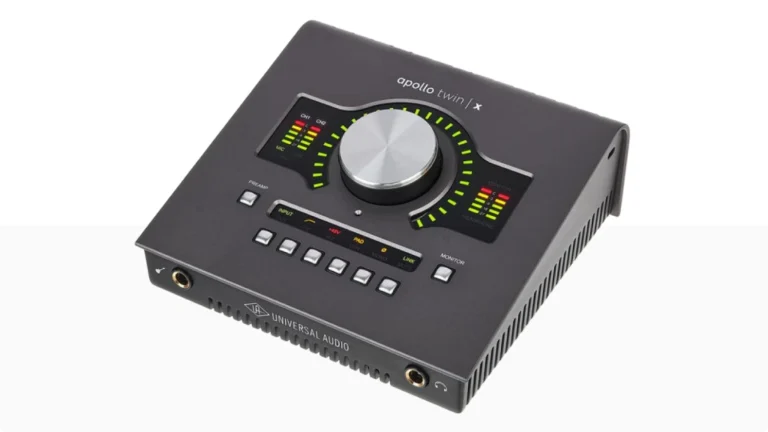
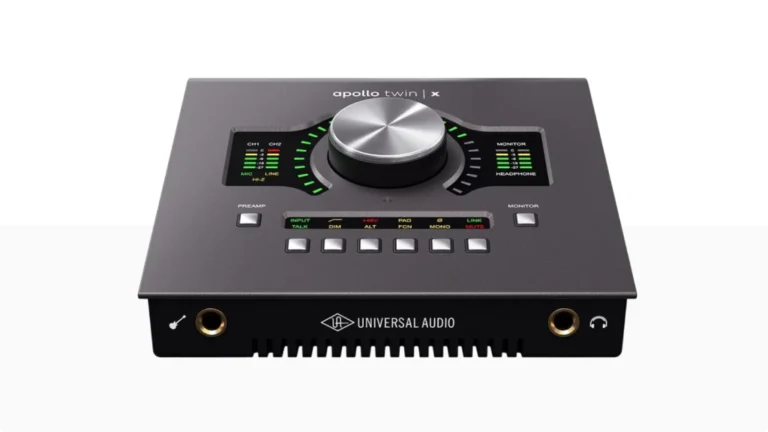
Apollo Twin X QUAD
The Apollo Twin X is the go-to option for most home studio setups. It comes in DUO and QUAD versions. Ideal for musicians and producers working on vocals, guitars, or small ensembles.
| Key Features
- Inputs: 2 XLR / TRS + 1/4″ Hi-Z combo inputs
- Outputs: 2 Monitor, 2 Line + 1/4” headphone outputs
- Compatibility: MacOS, Windows
- Connectivity: Thunderbolt
- Resolution:24-bit/192 kHz
- Plus: Real-time UAD processing with premium plugin emulations
Overview: Offering either two or four DSP cores for real-time UAD plugin processing.
This interface delivers pristine sound thanks to Unison-enabled preamps, which emulate classic analog gear like Neve, API, and SSL preamps.
With Thunderbolt 3 connectivity, it provides ultra-low latency and a dynamic range of 127 dB, making it ideal for musicians and producers working on vocals, guitars, or small ensembles.

Best for Advanced Users
Apollo x8p
The Apollo x8p interface is a rack-mounted interface perfect for more complex recording setups. With 8 Unison-enabled mic preamps, it excels in multi-instrument recording environments.
| Key Features
- Inputs: 4 XLR / TRS combo, 4 Line + 2 x 1/4″ Hi-Z combo inputs
- Outputs: 2 Monitor, 8 Line + 2 x 1/4” headphone outputs
- Compatibility: MacOS, Windows
- Connectivity: Thunderbolt and USB versions
- Resolution: 24-bit/192 kHz
- Plus: Real-time UAD processing with premium plugin emulations, ADAT S/MUX Optical Ports.
Overview: With 8 Unison-enabled mic preamps, it excels in multi-instrument recording environments, such as tracking bands or recording drums.
The hexa-core DSP engine provides plenty of processing power for UAD plugins, and the 129 dB dynamic range ensures that every nuance of your performance is captured.
Best for Content Creation
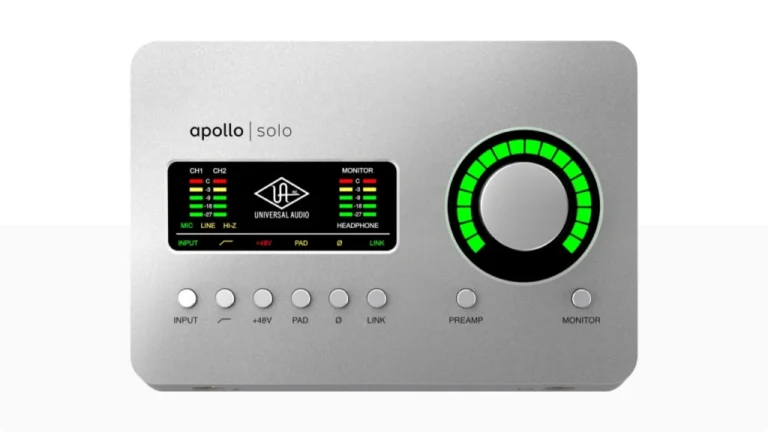
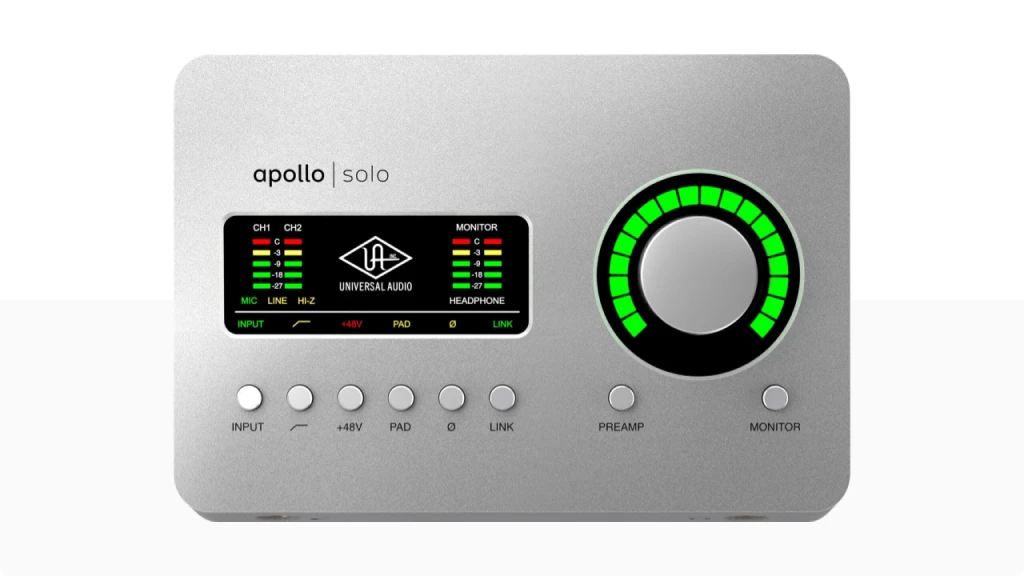
Apollo Solo
The Apollo Solo is a compact interface ideal for content creators, streamers, and podcasters. Its portability ensures low-latency real-time processing.
| Key Features
- Inputs: 2x Unison-enabled XLR/TRS combo
- Outputs: 2x 1/4” TRS + 1/4 headphone
- Compatibility: MacOS, Windows
- Connectivity: Thunderbolt and USB versions
- Resolution: 24-bit/192 kHz
- Plus: UAD real-time processing
The compact Apollo Solo audio interface is ideal for content creators, streamers, and podcasters.
Its portability, combined with Thunderbolt 3 connectivity, ensures low-latency real-time processing, and the Unison preamp allows for professional-grade vocal and instrument recordings.
The Solo is also compatible with UAD’s real-time plugin processing, making it a great choice for creators looking for high-quality sound on the go.
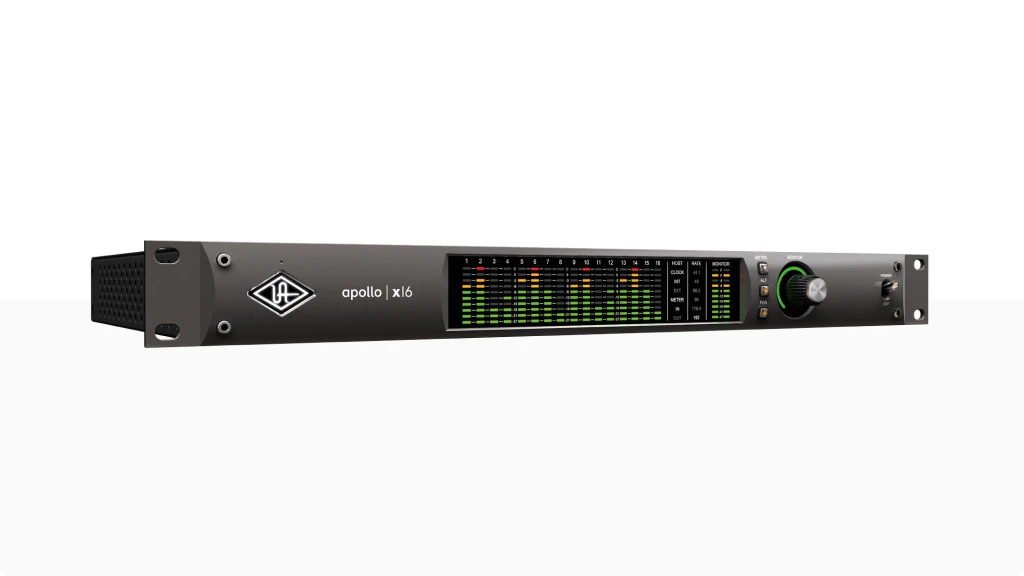
Best for Professional Studios
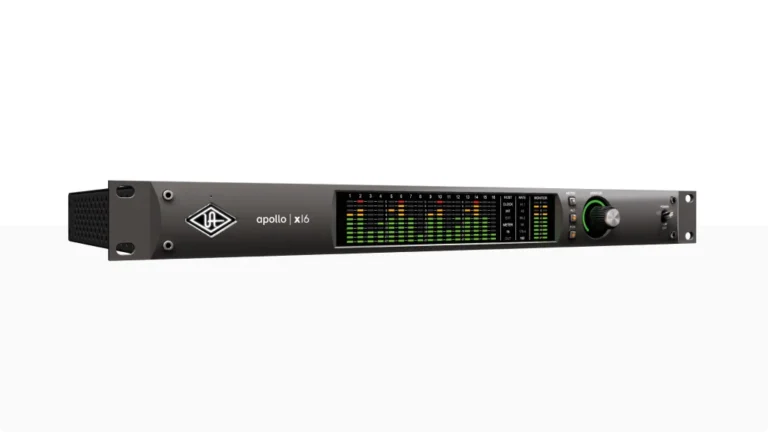
Apollo x16 Heritage
For professionals who need extensive I/O capabilities, the Apollo x16 offers 16 line inputs/outputs, ideal for studios using external preamps or large mixing consoles.
| Key Features
- Inputs: 16 analog inputs
- Outputs: 16 line outputs via dual female DB25 connectors + 2 XLR outputs
- Compatibility: MacOS, Windows
- Connectivity: Thunderbolt and USB versions
- Resolution: 24-bit/192 kHz
- Plus: UAD real-time processing, surround sound mixing up to 7.1
The Apollo x16 audio interface is Universal Audio’s flagship interface, providing a staggering 16 line inputs/outputs, making it ideal for large-scale studio environments or professional mixing engineers. It doesn’t have mic preamps, but this is perfect for those with outboard preamps or mixing desks.
The hexa-core DSP can handle complex mixes loaded with UAD plugins, and the 129 dB dynamic range ensures unmatched audio quality, especially in professional-grade mastering and mixing environments.
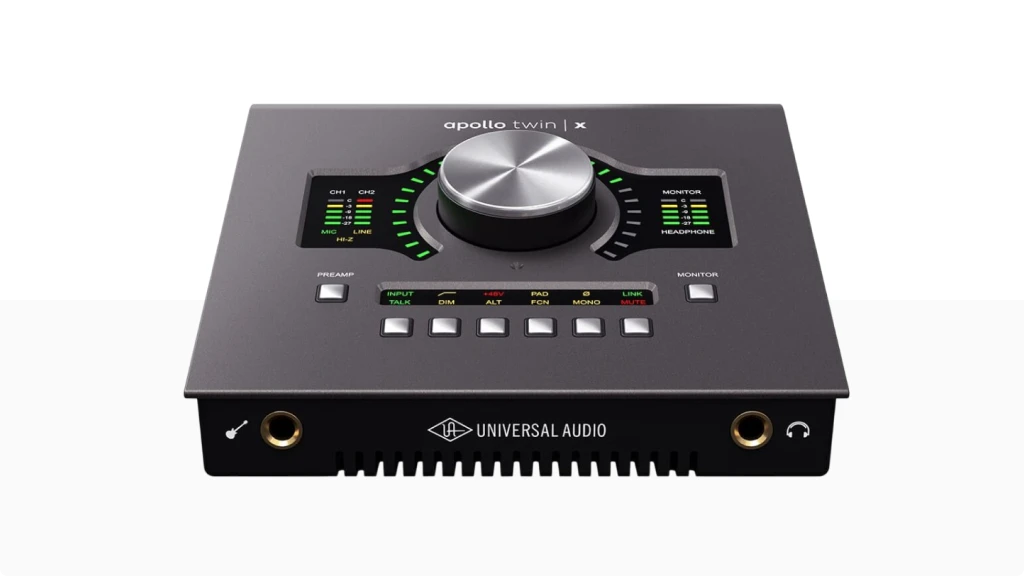
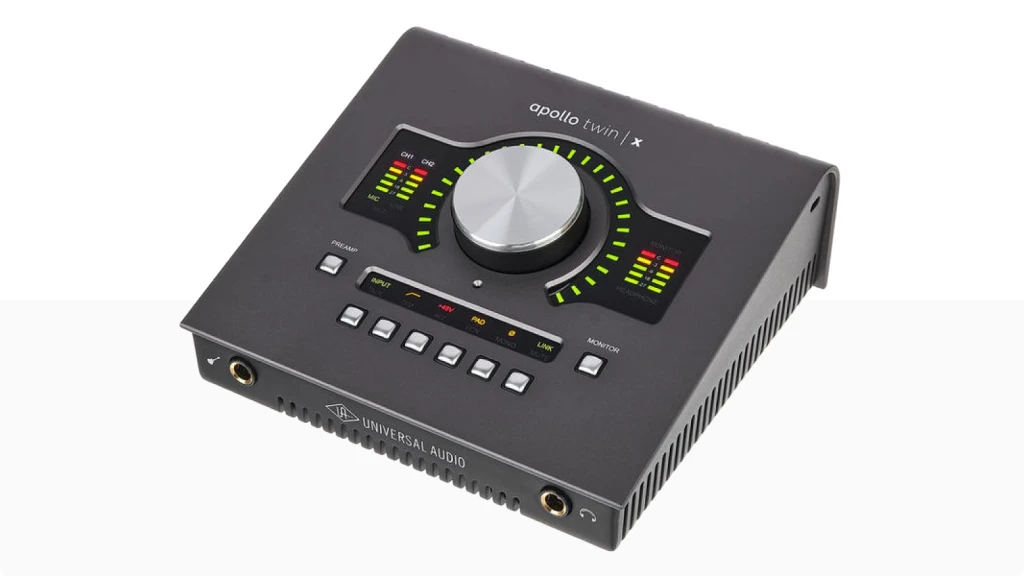
Apollo Twin X DUO
For musicians focused on recording voice, guitar and bass, the Hi-Z instrument input ensures that your instrument’s signal is captured with optimal clarity, while UAD cab sim plugins.
| Key Features
- Inputs: 2 XLR / TRS + 1/4″ Hi-Z combo inputs
- Outputs: 2 Monitor, 2 Line + 1/4” headphone outputs
- Compatibility: MacOS, Windows
- Connectivity: Thunderbolt and USB versions
- Resolution: 24-bit/192 kHz
- Plus: UAD real-time processing
For musicians focused on guitar or bass recording, the Apollo Twin X DUO audio interface is a standout.
It offers Hi-Z instrument inputs and Unison-enabled preamps that can emulate classic amps and pedals in real time.
Whether you’re recording direct guitar tones or using UAD’s acclaimed Fender, Marshall and Ampeg amp simulations, the Twin X DUO delivers professional results with no latency issues.
Conclusion: Which is the best Apollo Interface for You?
Choosing the right Apollo interface comes down to your specific needs:
- For home studios, the Apollo Twin X offers powerful real-time processing in a compact form.
- For content creators and streamers, the Apollo Solo provides high-quality sound without complex setups.
- For guitar and bass players, the Apollo Twin X DUO offers real-time amp and pedal emulations for authentic tones.
- For professional studios, the Apollo x16 delivers a high I/O count and processing power for complex projects.
Each Apollo interface comes with Unison-enabled preamps, DSP processing, and seamless integration with major DAWs, ensuring top-tier performance for any recording task.
Check some other options: Best Audio Interface for Home Studio: Budget to Pro