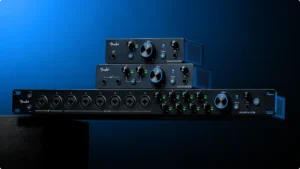
Fender Quantum HD Series Review (2026): Which is Best?
- Audio Interface, Buying Guides
- by Bruno Bontempo
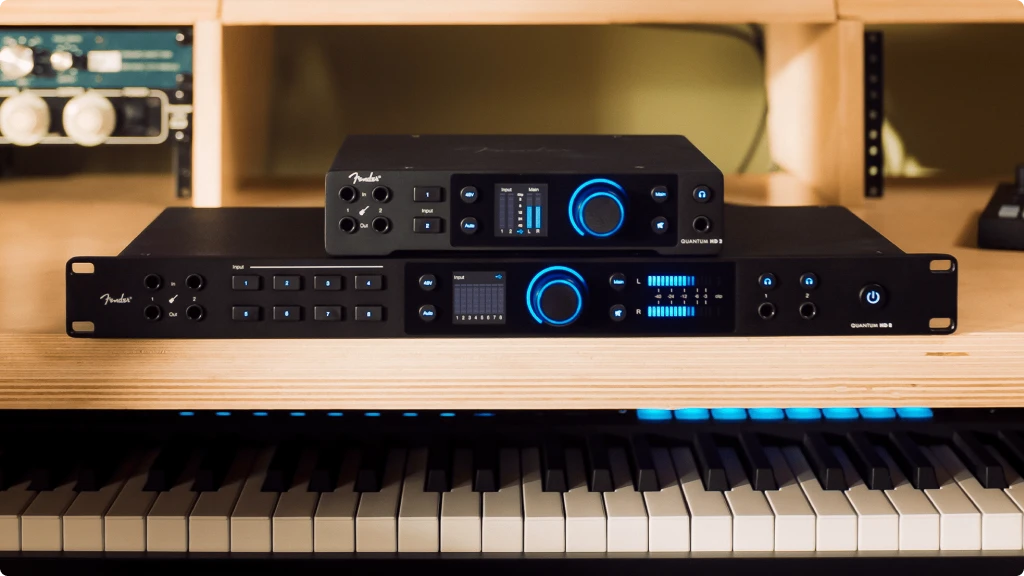
Fender Quantum HD Series Review. We tested both: HD 2 and HD 8. Find out which interface offers 32-bit recording, Re-amp outputs, and Auto Gain for your studio.
Our articles may include affiliate links and we may earn a commission. Here how it works.
Jump to...
| QUICK OVERVIEW
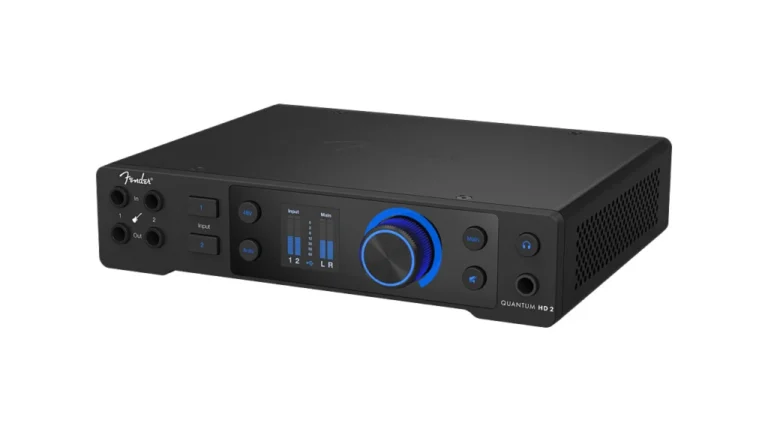
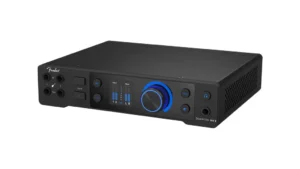
Fender Quantum HD 2
4.7
The project studio powerhouse. Two MAX-HD preamps, 32-bit/192kHz converters, ADAT expansion, and dedicated Re-amp outputs for serious guitarists who need studio-grade quality in a desktop format.
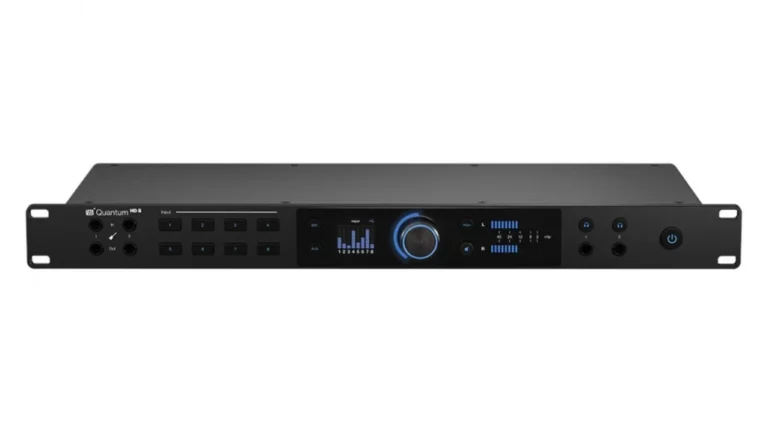
Fender Quantum HD 2
4.9
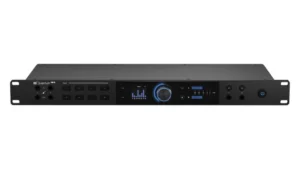
The complete recording hub. Eight MAX-HD preamps, 26×30 I/O, DC-coupled outputs, Word Clock, and ADAT standalone mode. Built for full-band recording and professional hybrid workflows.
A Guitarist's Step Up to High-Definition Recording
The Quantum LT series proved that Fender knows how to build interfaces for guitarists. So when they announced the HD series—a step up into 32-bit territory with dedicated Re-amp outputs—I wanted to see if the upgrade was worth the price difference.
The Quantum HD series represents Fender’s pro-grade offering, building on the PreSonus engineering legacy with features specifically designed for guitarists who want more headroom, more flexibility, and studio-quality results. The “HD” stands for High Definition, and it shows in the specs: 32-bit/192kHz conversion, 124 dB dynamic range, and expanded digital I/O that the LT series simply doesn’t offer.
As a bass player and guitarist who has tracked through dozens of interfaces, I borrowed both HD models from a friend’s music shop to put them through real recording sessions. The question wasn’t whether they sound good—they do. The question was whether the extra features justify the higher price point for different types of users.
What sets the HD series apart from the LT lineup:
- 32-bit/192kHz conversion (vs 24-bit on LT series)
- Dedicated Re-amp outputs for creative tone experimentation
- Auto Gain for hassle-free level setting
- ADAT and S/PDIF digital expansion
- MIDI I/O on both models
- Perpetual Fender Studio Pro license (not a trial)
- External power required (not bus-powered)
In this guide, I’ll break down how each HD model performs in real-world recording scenarios and help you decide if the upgrade from the LT series—or from your current interface—makes sense for your workflow.
The HD series isn’t just a spec bump. The Re-amp outputs and Auto Gain fundamentally change how you can approach guitar recording—experiment with tones after the fact, not just during tracking.
Pro Studio Compact
Fender Quantum HD 2
4.7
The Quantum HD 2 delivers professional 32-bit recording in a desktop format that doesn’t overwhelm your workspace. For guitarists and producers who need studio-grade conversion with room to expand, this interface hits a practical sweet spot.
| Pros
- 32-bit/192kHz conversion with 124 dB dynamic range
- Two MAX-HD preamps with 75dB gain
- Dedicated Re-amp outputs for tone experimentation
- Auto Gain for quick, accurate level setting
- 16 ADAT channels + S/PDIF for expansion
| Cons
- Requires external power—not portable
- Higher price than LT series
- Only two preamps
| Key Features
- Inputs: 2 XLR/Line Combo + 2 Hi-Z Instrument
- Outputs: 4 TRS + Headphone + 2 Re-amp
- Compatibility: Windows, Mac, iOS/iPadOS/Android
- Connectivity: USB-C (External Power Required)
- Resolution: 32-bit/192kHz
- Plus: 16 ADAT channels, DSP Monitor Mixer, Loopback, Auto Gain, Perpetual Fender Studio Pro license included
| Buy if...
- You want 32-bit recording quality
- You plan to experiment with Re-amping
- You need ADAT expansion for future growth
- You value Auto Gain for faster workflow
- You want a perpetual DAW license included
| Not ideal for...
- You need USB bus power for portability
- You require more than two mic preamps
- Budget is your primary concern
Overview
The Quantum HD 2 proved itself as a serious upgrade from the LT series during my testing sessions. The jump to 32-bit/192kHz isn’t just a marketing number—there’s noticeably more headroom when tracking dynamic sources like slap bass or aggressive picking.
The Re-amp outputs changed my workflow immediately. I tracked a clean DI signal from my Jazz Bass, then spent the evening routing it through different amp setups without touching the bass again. This is the kind of flexibility that studio engineers take for granted, but it’s been expensive to achieve at this price point until now.
Auto Gain works as advertised. Press the button, play your loudest passage, and the HD 2 sets an appropriate gain level. It’s not magic—you might still want to adjust manually for specific situations—but it removes a common friction point for self-recording musicians.
The Fender-designed instrument inputs carry over from the LT series, and they still capture the character of your playing beautifully. Plug in a Precision Bass or a Stratocaster, and the natural dynamics translate directly into your DAW.
The Re-amp outputs are the feature I didn’t know I needed. Being able to track clean and commit to amp tones later completely changes the pressure of tracking sessions.
Full Studio Solution
Fender Quantum HD 8
4.9
Ready for full-band recordings and complex production setups? The Quantum HD 8 delivers everything the HD 2 offers, multiplied across eight preamps with expanded routing, DC-coupled outputs for modular integration, and ADAT standalone mode for scaling your studio.
| Pros
- Eight MAX-HD preamps with 75dB gain
- 26x30 I/O for large-scale sessions
- DC-coupled outputs for CV/modular
- Word Clock I/O for multi-device sync
- ADAT standalone mode—add 8 more preamps to existing setup
| Cons
- Requires external power—not portable
- Higher price point
- Overkill for solo beginners
| Key Features
- Inputs: 8 XLR/TRS Combo + 2 Hi-Z Instrument
- Outputs: 10 TRS (DC-coupled) + 2 Headphones + 2 Re-amp
- Compatibility: Windows, Mac, iOS/iPadOS/Android
- Connectivity: USB-C (External Power Required)
- Resolution: 32-bit/192kHz
- Plus: 16 ADAT channels, DSP Monitor Mixer, Loopback, Word Clock, Auto Gain, Perpetual Fender Studio Pro license included. 1U Rackmount
| Buy if...
- You record full bands or drum kits
- You work with modular synths and need CV outputs
- You want to expand an existing setup via ADAT
- You need Word Clock sync for multiple devices
- You're building a serious project studio
| Not ideal for...
- You primarily record solo
- You need portability
- Eight preamps exceeds your needs
Overview
The Quantum HD 8 handles everything I threw at it during testing. Recording a full drum kit with eight mics, each preamp delivered clean gain with plenty of headroom. The 32-bit conversion means I could track hot without worrying about clipping—there’s so much dynamic range that you have to actively try to distort the input.
The ADAT standalone mode deserves special attention. You can use the HD 8 purely as an 8-channel preamp feeding another interface via ADAT. This makes it a practical upgrade path—buy the HD 8 now, and it remains useful even if you eventually move to a larger system.
DC-coupled outputs opened up modular integration possibilities. Sending CV directly from my DAW to control external synths and pedals bridged the digital and analog worlds in ways that felt genuinely creative.
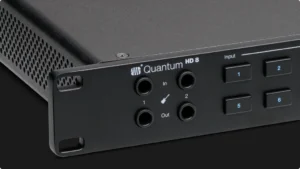
The 1U rackmount format fits cleanly into a studio setup, though the rear-panel connections mean you’ll want everything accessible. The front-panel instrument inputs and Re-amp outputs handle the connections you’ll touch regularly.
ADAT standalone mode is the feature that makes the HD 8 future-proof. It’s not just an interface—it’s an 8-channel preamp that happens to also work standalone.
Specs Comparison Table
| Feature | Quantum HD 2 | Quantum HD 8 |
|---|---|---|
| Inputs | 2 XLR/Line + 2 Hi-Z | 8 XLR/TRS + 2 Hi-Z + ADAT |
| Outputs | 4 TRS + Headphone | 10 TRS + 2 Headphones |
| Preamps | 2 MAX-HD (75dB) | 8 MAX-HD (75dB) |
| Instrument Inputs | 2 | 2 |
| Re-amp Outputs | 2 | 2 |
| Resolution | 32-bit/192kHz | 32-bit/192kHz |
| Dynamic Range | 124 dB | 124 dB |
| ADAT | 16 channels In | 16 channels I/O |
| S/PDIF | I/O | I/O |
| MIDI | I/O | I/O |
| Word Clock | ✗ | I/O |
| DC-Coupled | ✗ | ✓ |
| Standalone Mode | ✗ | ADAT Preamp Mode |
| Power | External | External |
| Form Factor | Desktop | 1U Rackmount |
| Software Bundle | Perpetual license | Perpetual license |
HD Series vs LT Series: Which Line is Right for You?
The HD series costs more—but what do you actually get for the money?
32-bit vs 24-bit recording: The HD series captures more dynamic range. In practice, this means more headroom and less worry about clipping during tracking. For most home recordings, 24-bit is sufficient. But if you track unpredictable dynamic sources, 32-bit provides meaningful insurance.
Re-amp outputs: This is the feature that matters most for guitarists. The ability to track clean and experiment with amp tones later fundamentally changes your workflow. The LT series doesn’t offer this.
Auto Gain: A convenience feature that speeds up session setup. Not essential, but genuinely useful for self-recording musicians.
Perpetual software license: The HD series includes a perpetual Fender Studio Pro license. The LT 2 and LT 4 only include 6-month trials. The LT 16 includes a perpetual license.
External power vs bus power: The LT 2 and LT 4 run on USB bus power—plug in and go. Both HD models require external power, which limits portability.
Bottom line: If Re-amping and 32-bit conversion matter to your workflow, the HD series justifies the cost. If you need portability and simpler operation, the LT series delivers excellent value.
Why Re-Amp Outputs Matter for Guitarists
Most guitarists commit to amp tones during tracking. You dial in your sound, hit record, and hope it works in the mix. Re-amp outputs flip this approach entirely.
With the HD series, you can track a completely clean DI signal. Your guitar goes directly into the interface, capturing every nuance of your playing without any amp coloration. Later—hours, days, or weeks later—you send that DI signal out through the Re-amp output into any amp, pedal chain, or combination you want.
This approach offers several practical advantages:
Experiment without time pressure. During tracking, you focus on the performance. Tone decisions can wait until mixing when you have perspective on the whole song.
Try multiple amp setups. Record the same DI through your Fender Twin, then through a Marshall, then through a modeling unit. Compare and choose the best fit.
Fix tone problems. If the original amp tone doesn’t sit well in the mix, you’re not stuck with it. Re-amp with different settings or a completely different signal chain.
Combine DI and amp. Blend the direct signal with re-amped tones for layered guitar sounds that have both clarity and character.
The HD series Re-amp outputs have proper impedance matching for guitar gear, so you don’t need an additional re-amp box.
Understanding 32-Bit Recording
The jump from 24-bit to 32-bit sounds like marketing, but there’s real-world benefit here.
Bit depth determines dynamic range—the difference between the quietest and loudest sounds your interface can capture. 24-bit provides roughly 144 dB of theoretical dynamic range. 32-bit float extends this dramatically.
In practice, this means you’re essentially immune to digital clipping at the input stage. Even if you accidentally track too hot, the extra headroom preserves your signal. You can lower the level in your DAW and recover a clean recording.
This matters most for:
- Unpredictable dynamic sources (drums, aggressive guitar playing)
- Self-recording musicians who can’t ride the gain during takes
- Situations where you’re tracking quickly and can’t do test passes
For careful, controlled recording with proper gain staging, 24-bit remains perfectly adequate. But if you want the safety net of massive headroom, 32-bit delivers it.
Final Verdict: Which Quantum HD Should You Buy?
Buy the Quantum HD 2 if:
- You record yourself or one other musicia
- Re-amping appeals to your workflow
- You want 32-bit headroom in a desktop format
- You plan to expand later via ADAT
Buy the Quantum HD 8 if:
- You record full bands, drum kits, or multiple musicians
- You work with modular synths and need DC-coupled CV outputs
- You want ADAT standalone mode as an expansion option
- Word Clock sync matters for your multi-device setup
- You’re building infrastructure for a serious project studio
Stick with the LT series if:
- USB bus power and portability matter
- 24-bit recording meets your needs
- Re-amping isn’t part of your workflow
- Budget is the primary factor
For guitarists who want studio-quality recording with room to experiment, the HD 2 represents the sweet spot. It has enough I/O for most project studio needs, the Re-amp outputs enable creative flexibility, and the 32-bit conversion provides genuine headroom advantages.
The HD 8 makes sense when you’ve outgrown smaller interfaces or when you’re building a studio meant to handle larger sessions. The ADAT standalone mode means it remains useful even as your needs evolve.
Both HD models deliver what Fender promises: professional recording quality with features designed specifically for how guitarists actually work.
FAQ
Is the Quantum HD 2 portable?
No. Unlike the LT 2 and LT 4, the HD 2 requires external power. It’s designed for permanent studio installation rather than mobile recording.
Can I use the HD series with amp simulators?
Yes. The Fender-designed instrument inputs work with any amp sim—Neural DSP, Line 6 Helix Native, IK Multimedia AmpliTube, and others. The Re-amp outputs also let you send processed signals to real amps for re-recording.
What's the difference between HD and LT preamps?
Both series use MAX-HD preamps with 75dB gain. The main difference is the converters—32-bit/192kHz on HD versus 24-bit/192kHz on LT—and the additional features like Re-amp outputs and Auto Gain.
Do I need an external re-amp box with the HD series?
No. The dedicated Re-amp outputs have proper impedance matching for guitar gear. You can connect directly to amps and pedals without additional hardware.
Is the Quantum HD compatible with my phone or tablet?
Yes. Both HD models work with iOS, iPadOS, and Android devices, though they require external power—you can’t run them from a phone alone.
| Why Can You Trust Us

Bruno Bontempo
I've been recording, producing, and playing bass for over 20 years—from touring with my first band at 15 to playing progressive metal across Europe today. Through multiple albums, projects (Madness of Light, Rising Course, Roots of Ascendant, Human|Archive), and production work, I've tested audio interfaces in every scenario imaginable. At Best Audio Hub, I combine my historian background with years of hands-on music and audio experience. No marketing fluff—just honest insights from someone who's been in the trenches.
| ALSO REVIEWED