MIPI SWI3S v1.0 (SoundWire I3S): The Future of Audio Interface
- Audio Interface, Setup and Tutorials
- by Bruno Bontempo
Discover how the new MIPI SWI3S v1.0 (SoundWire I3S) audio interface simplifies design, boosts bandwidth to 76 Mbps, and enhances noise immunity. Learn why this unified 2-wire link is the future for mobile, automotive, and smart device audio.

Best Audio Hub tests and reviews audio interfaces. Our articles may include affiliate links and we may earn a commission at no extra cost to you. Read more about how we evaluate products.
Are you tired of complex audio wiring? The world of embedded audio is constantly evolving, demanding more from our devices: higher fidelity, more microphones for smarter voice assistants, immersive spatial audio, and all while consuming less power and space. For years, engineers have wrestled with legacy interfaces that weren’t designed for these modern challenges.
That’s all changing with the arrival of SoundWire I3S (MIPI SWI3S v1.0), a groundbreaking new audio interface specification released in October 2025. This isn’t just an incremental update; it’s a transformative approach that simplifies design and supercharges performance. In this article, we’ll break down what SoundWire I3S is, why it matters for the next generation of gadgets, and how it benefits both manufacturers and consumers.
What is SoundWire I3S (MIPI SWI3S)?
The MIPI SoundWire I3S (SWI3S v1.0) is a new standardized specification developed by the MIPI Alliance, an international organization that creates interface standards for mobile and connected devices . Think of it as a unified, high-speed highway for audio and data, replacing the tangled network of older, single-purpose roads.
It builds upon the proven two-wire architecture of its predecessor, MIPI SoundWire, but introduces significant advancements in speed, flexibility, and noise resistance to meet the demands of today’s complex audio systems. In essence, it’s a scalable, low-power, and noise-resilient embedded audio interface designed for all device form factors, from the smallest earbuds to large automotive infotainment systems.
Why Do We Need it?
You might be wondering, “If the current standards work, why change?” Legacy interfaces like I2S (Inter-IC Sound) and TDM (Time-Division Multiplexing) were designed for a simpler era. They struggle with the three major constraints of modern electronics:
- EMI (Electromagnetic Interference): As devices get smaller and denser, signals are more prone to interference, degrading audio quality
- Power Consumption: “Always-on” voice assistants and low-power wearables need incredibly efficient systems .
- Physical Space: Designers have less and less room for multiple wires and shielding components .
These older technologies often require separate lines for data, control commands, and clocks, leading to increased pin count, board complexity, and cost . SoundWire I3S elegantly solves these problems by unifying everything into a single, robust two-wire interface .
Key Features and Breakthroughs of SoundWire I3S
So, what makes SWI3S so special? Here’s a look at its standout features:
- Unified Two-Wire Link: SWI3S transports audio data, control commands, interrupt signals, and synchronization information over just two pins. This drastically reduces interconnect complexity and pin count, simplifying board design and saving valuable space.
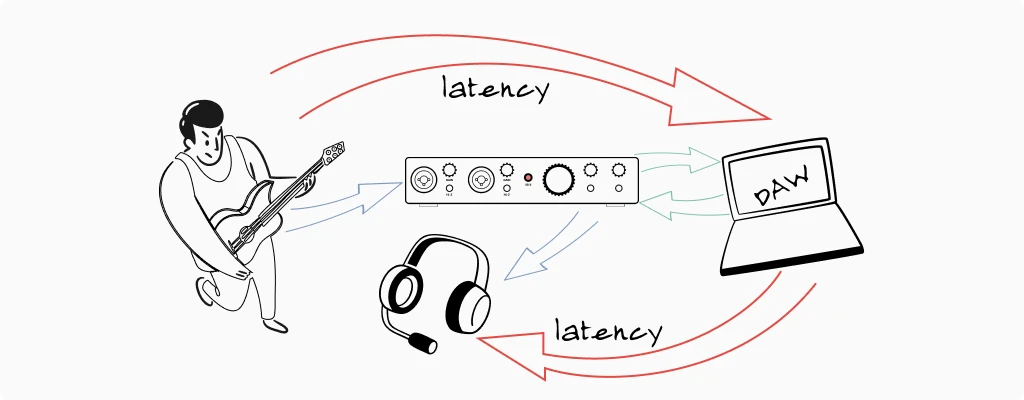
- High Bandwidth and Low Latency: With support for data rates up to 76 Mbps (in DLV mode), SWI3S offers more than triple the bandwidth of some earlier audio interfaces . It also boasts an incredibly low transmission latency of around 300 ns end-to-end, which is crucial for high-quality audio processing and real-time communication.
- Exceptional Noise Immunity: The specification supports two physical layer (PHY) options. The Differential Low-Voltage (DLV) signaling mode provides high noise immunity, low crosstalk, and reduced EMI, minimizing the need for heavy physical shielding. The Forwarded Bit Clock Single-Ended (FBCSE) mode is another option for different design needs . This makes audio clearer and more reliable, especially in noisy environments like a car.
- Scalable Multi-Drop Architecture: A single SWI3S link can support one manager (like a host processor) and up to 12 audio peripherals . This means you can connect multiple microphones, speakers, amplifiers, and even haptic drivers to the same two-wire bus, enabling sophisticated systems like microphone arrays for beamforming and immersive audio setups.
- Advanced Power Management: Built for always-on devices, SWI3S incorporates sophisticated power-saving states like sleep/wake transitions and clock-pause modes, significantly reducing power consumption during idle periods .
| Feature | Legacy Interfaces (e.g., I2S, TDM) | SoundWire I3S (SWI3S) |
|---|---|---|
Connection Complexity |
Multiple dedicated lines for data, control & clock |
Unified 2-wire link for everything |
Noise Immunity |
Limited, often requires heavy shielding |
High, with DLV PHY for reduced EMI |
Maximum Bandwidth |
Lower (e.g., ~24 Mbps for older SoundWire) |
Up to 76 Mbps |
System Topology |
Less flexible |
Scalable, up to 12 devices per link |
Power Management |
Basic |
Advanced low-power states for always-on operation |
Real-World Applications: Where You'll Find SoundWire I3S
This new interface isn’t just theoretical; it’s set to power audio in a wide range of next-generation products:
- Mobile & Wearables: High-end smartphones with advanced noise cancellation, TWS earbuds with multiple microphones, and augmented reality (AR) glasses requiring precise, low-latency audio.
- Automotive: In-car voice assistants, distributed speaker arrays for immersive audio, and rear-seat entertainment systems that require robust performance over longer cable lengths.
- Voice-First & Smart Home Devices: Smart speakers with far-field voice recognition and beamforming for pinpoint accuracy, even in noisy rooms.
- High-Fidelity Audio: Systems supporting immersive and spatial audio formats that demand high bandwidth and multiple synchronized channels.
The Future is Already in Development
The MIPI Alliance is not resting on its laurels. The Audio Working Group is already developing version v1.1 of the specification, which will add support for hub-based and tiered topologies, allowing for even more complex and flexible system designs. This update is expected to be available in early 2027.
Conclusion: A Clear Step Forward for Audio
The introduction of MIPI SoundWire I3S (SWI3S v1.0) marks a significant leap forward in audio interface technology. By unifying control and data onto a single, high-speed, noise-resistant two-wire link, it provides the robustness, configurability, and efficiency required by today’s—and tomorrow’s—complex audio system designs.
For consumers, this translates to devices with clearer audio, longer battery life, and more advanced features like superior voice control and immersive soundscapes. For engineers and manufacturers, it offers a flexible, future-proof foundation that simplifies design while overcoming the critical constraints of EMI, power, and space.
As this new standard begins to appear in products over the coming years, we can expect a new era of audio innovation across all our favorite gadgets.
FAQ
What is the main advantage of SoundWire I3S over older interfaces like I2S?
The main advantage is simplification. SoundWire I3S combines audio data, control commands, and clocking onto a single, two-wire connection. This reduces design complexity, pin count, and cost, while also offering better noise immunity and higher bandwidth for modern multi-microphone and immersive audio systems.
Can SoundWire I3S connect to multiple audio devices at once?
Yes. A key feature of SWI3S is its scalable multi-drop architecture. A single two-wire link can support one host processor and up to 12 different audio peripherals simultaneously, such as multiple microphones, speakers, and amplifiers, all on the same bus.

| ALSO REVIEWED