Audio Interface News 2026: Latest Releases & Updates
Last Update: 21 Jan 2026
–
NAMM 2026 Edition
–
by Bruno Bontempo
New releases and announcements from NAMM 2026. Coverage of the latest interfaces from Fender, Yamaha, SSL, Korg, and more, with links to our in-depth reviews.
Our articles may include affiliate links and we may earn a commission. Here how it works.
| Latest Releases
Jan 22
Roland
GO:MIXER PRO-X / GO Series
Compact smartphone audio mixers and interfaces for content creators. Multiple inputs for mics, instruments, and media players with battery or bus power operation.
Jan 22
Neve
StarNet ADA24
24-channel Dante-enabled A/D and D/A converter with remote-controllable 1073-style preamps. Designed for networked studio and live sound environments requiring Neve tone at scale.
Jan 22
Neve
Neve 1073DPX-D
Dual-channel Class A preamp with analog EQ and digital conversion in a 2U rackmount. USB and ADAT outputs allow direct integration with your DAW while retaining the iconic 1073 sound.
Jan 16
iConnectivity
PlayAUDIO2U
Professional 2U rackmount interface built for live performance with 24 balanced XLR outputs, four ultra-low noise preamps, and iConnectivity’s renowned multi-computer redundancy failover protection.
Jan 15
Yamaha
URX Series (URX22, URX44, URX44V)
New audio interface lineup featuring touchscreen GUI, onboard DSP mixing, and 32-bit/192kHz support. The URX44V adds HDMI video capture for streamers and content creators.
Jan 15
Boss
GX-1 & GX-1B
Entry-level multi-effects processors with AIRD amp modeling, color displays, and built-in expression pedal. The GX-1 targets guitarists while the GX-1B is optimized for bass with dedicated amp models.
Jan 14
Solid State Logic
UMD192
Professional digital interface bridging USB, MADI, and Dante with up to 192 channels at 96kHz. Designed for live sound, broadcast, and high-spec studio environments with ultra-low 0.25ms Dante latency.
Jan 13
Fender
Quantum LT Series (LT 2, LT 4, LT 16)
New USB-C interface line with Fender-designed instrument inputs and MAX-HD preamps with 75dB of gain. Includes Fender Studio Pro software. The LT 16 adds standalone mic pre mode and DC-coupled outputs.
Jan 13
Fender
Quantum HD Series (HD 2, HD 8)
Professional-grade interfaces with 32-bit/192kHz conversion, ADAT expansion, re-amp outputs, and Auto Gain. The HD 8 offers 26×30 channels with standalone ADAT preamp mode.
Jan 13
Fender
AudioBox Go
Ultra-compact bus-powered interface for mobile recording. Features dedicated instrument input, XLR combo with phantom power, and zero-latency monitoring. Includes 6-month Fender Studio Pro trial.
Jan 12
Electro-Harmonix
Effects Interface Hardware Plugin
Unique pedal-format interface that turns your stompboxes into DAW plugins and your plugins into pedalboard effects. Three modes: Hardware Plugin, Pedalboard, and Audio Interface.
Jan 8
Black Lion Audio
MIDI Eight
8×8 MIDI interface with class-compliant USB-C, three standalone routing modes (Pass, Thru, Merge), and a built-in 5-port powered USB hub. Front-panel I/O for quick connections.
Sep 2025
Audient
ORIA Mini
Hardware room correction system powered by Sonarworks SoundID Reference. Sits between your interface and monitors, corrects acoustic imperfections via onboard DSP with zero CPU load.
What's New After the NAMM Show 2026
NAMM 2026 (January 20-24, Anaheim Convention Center) wrapped up with several notable audio interface announcements. While not as interface-heavy as NAMM 2025, this year brought meaningful releases across different market segments—from portable creative tools to high-channel-count professional solutions.
Apogee Symphony Nova
Apogee announced Symphony Nova, a desktop interface combining four high-end analogue microphone inputs with real-time, ARM-powered DSP processing. Each input has its own dedicated DSP path, allowing latency-free processing during recording.
Each input channel runs Apogee’s new ECS Channel Strip directly on the onboard DSP. The channel strip includes a newly developed four-band EQ, high-pass and low-pass filters, compression and saturation. In addition to input processing, Symphony Nova provides onboard real-time reverb and delay effects.
The interface also includes DSP-based monitor correction with SoundID support, helping users achieve more consistent monitoring results in untreated rooms. We Rave You An onboard ADAT input allows the system to be expanded with additional microphone preamps or converters, while dedicated MIDI In and Out connections provide direct integration with external MIDI hardware.
SSL UMD192
Solid State Logic announced the UMD192, a powerful and portable USB audio interface designed to meet the demands of professional live sound, broadcast, and high-spec studio environments. With seamless integration across MADI, Dante, and USB protocols, the UMD192 delivers flexible routing possibilities, high channel counts, and uncompromising performance for recording, playback, and format bridging.
Offering unprecedented power in a compact and portable half-rack form factor, the UMD192 is able to deliver 192 channels at both 96 and 48 kHz, or 128 channels at 192 kHz.
The UMD192 supports bi-directional audio between any two formats (MADI, Dante or USB), making it an ideal choice for bridging multiple MADI-connected devices into a Dante network, or for high-channel-count recording and playback via USB 3.0. A split feed can be routed to the third format.
Key specifications:
- USB 3.0 class-compliant interface (Mac OS compatible; Windows support via SSL driver)
- 6x MADI BNC pairs with redundant mode for 3x dual-redundant MADI connections
- Fully interoperable Dante AoIP with AES67 and ST 2110 (with DDM) support
- Ultra-low Dante latency—as low as 0.25ms
- Power redundancy with AC, USB bus power, and PoE options
The UMD192 is a perfect match for SSL Oracle or ORIGIN installations with Dante or MADI conversion and an ideal computer interface for Harrison 32Classic systems with Dante.
Korg microAUDIO 22 and 722
Korg unveiled the microAudio 22 and 722, two compact USB-C 2-in/2-out interfaces. Both units offer Hi-Z input, +48V phantom power, and up to 24-bit/192kHz recording.
Both will have built-in hardware DSP effects, including a noise gate, compressor, and more. Each channel has a level control with dedicated LEDs to monitor the signals.
The key differentiator is the 722’s analog filter section. The microAudio 722 features a 700S analog filter with lowpass and highpass options based on the miniKORG 700S synthesizer. As a bonus, you can use the microAudio 722 as a standalone analog filterbox—connect it to a USB-C power supply and route external stereo signals through it.
Neve 1073DPX-D
Neve introduced the 1073DPX-D, a dual-channel version of their 1073 preamp and audio interface combo. The unit combines the iconic sound of the 1073 with high-performance A-D/D-A conversion and USB interfacing, enabling users to record, process, and monitor via USB or ADAT.
ADAT expansion mode allows the 1073DPX-D to enhance your existing audio interface with two complete analogue 1073 channel strips. Features include DIGI I/O routing for using the 1073 as a hardware insert in your DAW, multiple DAW monitoring pathways, and a powerful headphone amplifier.
Proel DIGIPAD 8
Proel presented the DIGIPAD 8, a compact 8-channel digital mixer with a built-in 24-bit/48kHz USB audio interface. The unit features motorized faders, a touchscreen display, and Wi-Fi connectivity for app control on iOS, Android, macOS, and Windows.
It includes DSP effects (4-band full parametric EQ, compressor, gate, and reverb) plus a dedicated Bluetooth channel for wireless music streaming. At just over 2 kg, it’s designed for portability.
Fender Studio / PreSonus Rebrand
This was the biggest ecosystem story at NAMM 2026 for the recording world.
From 13 January 2026, Studio One is now known as Fender Studio Pro, while the Quantum and AudioBox lines transition to the Fender Quantum Series and Fender AudioBox.
Alongside the consolidation of PreSonus Studio One into Fender Studio Pro, PreSonus’s Quantum and AudioBox interface lines are also being rebranded under Fender. Meanwhile, the PreSonus brand remains focused on studio and live gear, maintaining its popular lines of studio monitors, PA speakers, and digital consoles.
Fender Quantum LT Series (Available now)
The Quantum LT Series includes three USB-C audio interfaces featuring MAX-HD preamps with +75 dB of gain.
Quantum LT 2: The most streamlined interface in the LT lineup. Features one MAX-HD microphone preamp, a Fender-designed instrument input, loopback for streaming, and a standalone “Mixer Mode” for DAWless use.
Quantum LT 4: Expands to two MAX-HD mic preamps with custom low-latency drivers. Loopback makes podcasting and streaming easy, while standalone Mixer Mode adds utility when not using a DAW.
Quantum LT 16: The ultimate interface in the LT series, built for project studios and multi-instrument setups. Eight MAX-HD mic preamps offering 75 dB of gain, eight rear panel TRS analog line inputs for outboard gear integration, MIDI I/O, and comes bundled with Fender Studio Pro.
Fender Quantum HD Series
The Quantum HD 2 is a 20×24 USB-C audio interface featuring auto gain, up to 32-bit/192 kHz AD/DA, 16-channel ADAT, S/PDIF I/O, and reamp outputs. The Quantum HD 8 offers 26×30 interfacing and upgrades to eight MAX-HD mic pres.
Fender AudioBox Go
An ultraportable 2×2 USB-C bus-powered interface with up to 24-bit/96 kHz conversion, an XLR-1/4″ combo mic/line input with phantom power, and a dedicated Hi-Z input.
The reception to the rebrand has been mixed. Many current Studio One users are upset by the name change, though the new product line has potential to find new customers among guitarists who trust the Fender brand.
FAQ
How often is this page updated?
We update this page weekly, typically on Mondays. During trade shows like NAMM, we add new announcements within 24-48 hours. Follow us on social media for real-time updates.
How do you test audio interfaces?
Each interface goes through our standardized testing process measuring preamp noise, converter quality, latency, and driver stability. We also evaluate build quality and usability in real-world sessions.
Are your reviews sponsored?
No. We purchase most review units or receive loaner units that are returned after testing, I also rely on my network. Manufacturers have no editorial input.
| Why Can You Trust Us
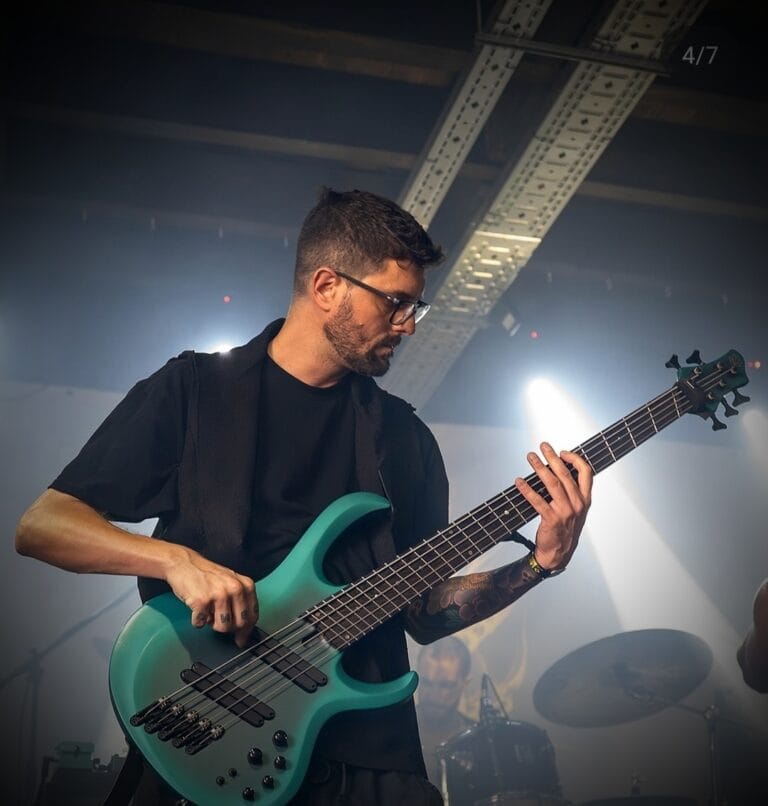
Bruno Bontempo
I've been recording, producing, and playing bass for over 20 years—from touring with my first band at 15 to playing progressive metal across Europe today. Through multiple albums, projects (Madness of Light, Rising Course, Roots of Ascendant, Human|Archive), and production work, I've tested audio interfaces in every scenario imaginable. At Best Audio Hub, I combine my historian background with years of hands-on music and audio experience. No marketing fluff—just honest insights from someone who's been in the trenches.
| ALSO REVIEWED