NAMM 2026: Rumors, News & New Audio Interfaces

NAMM 2026 preview: SSL 18, Harrison D510, new bass gear from Dingwall & Ibanez, plus studio equipment launching Jan 22-24 in Anaheim.

NAMM 2025: Latest Audio Interface Releases
Table of Contents

| LAST-MINUTE ANNOUNCEMENTS

Last updated: January 18, 2026

Full coverage below.

Fender Studio Quantum Series: PreSonus Reborn

One of the biggest surprises at NAMM 2026 is Fender’s aggressive move into the audio interface market. Following their acquisition of PreSonus, Fender has rebranded the entire product line under “Fender Studio” and launched the Quantum series—a comprehensive lineup targeting everyone from bedroom producers to professional studios.
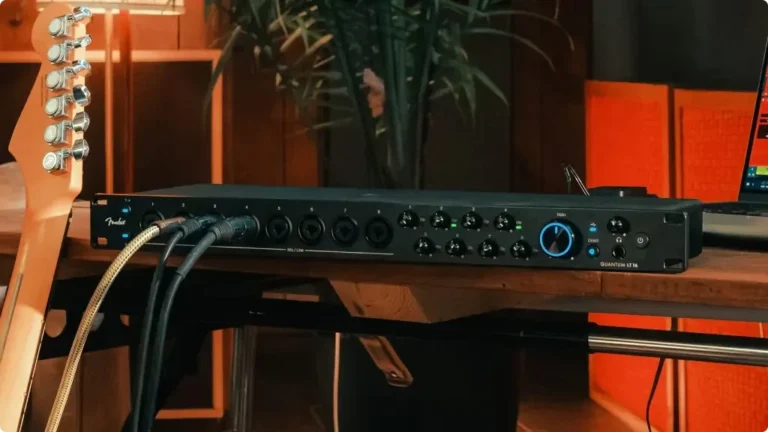
The Quantum LT Series

The Quantum LT Series

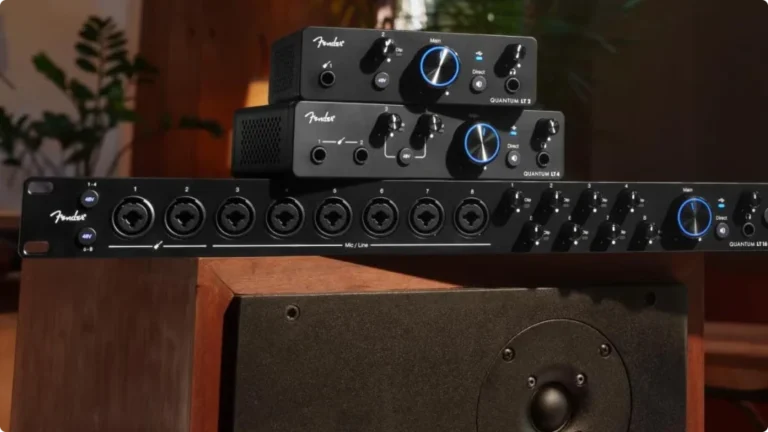
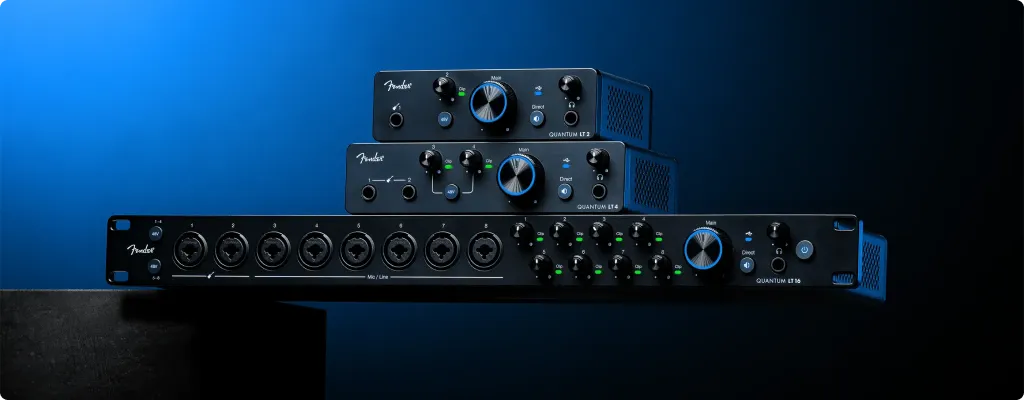
The LT (Light) series offers accessible entry points without sacrificing quality:

Quantum LT 2: Two preamps with MAX-HD technology delivering 75dB of gain. At $149.99, this positions directly against the Focusrite Scarlett 2i2 and delivers 32-bit/192kHz conversion. Includes Fender Studio Pro software.

Quantum LT 4: Four preamps for those needing additional inputs. Pricing TBD.

Quantum LT 16: Eight preamps with expanded I/O for larger setups. This targets the mid-range market where SSL 18 and Audient iD48 compete.

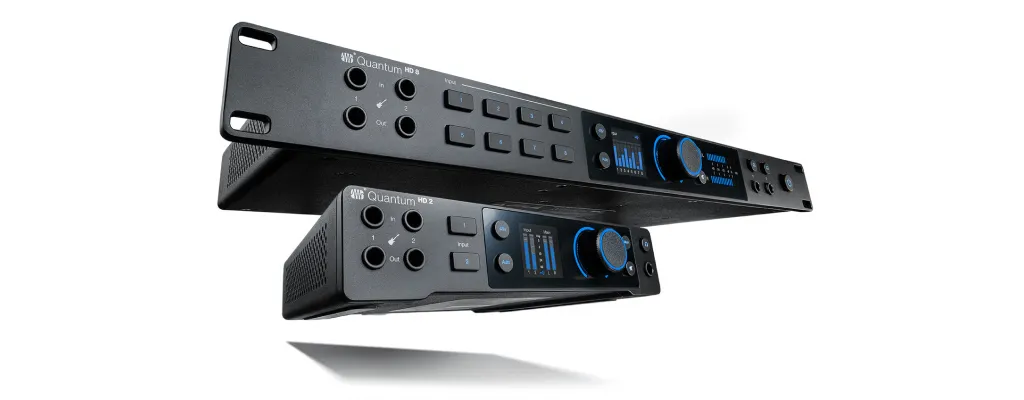
The Quantum HD Series

The Quantum HD Series_ audio interfaces on a white background

The HD (High Definition) series represents Fender’s professional tier:

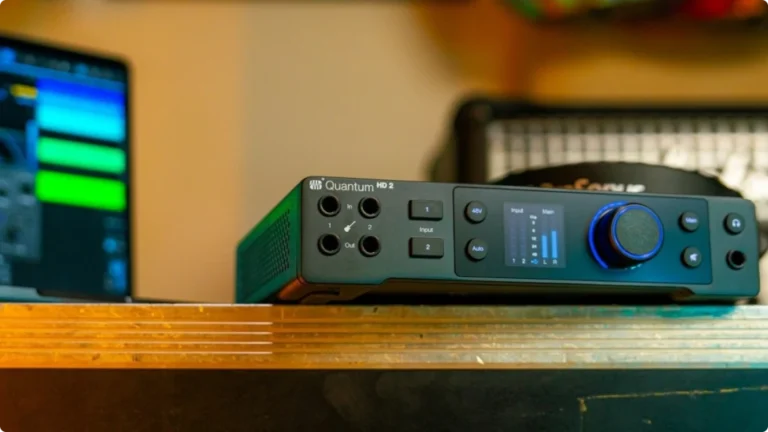
Quantum HD 2: Despite having only two preamps, this unit offers 20 inputs and 24 outputs—clearly designed for studios integrating external gear. 32-bit/192kHz conversion with the same MAX-HD preamp technology.
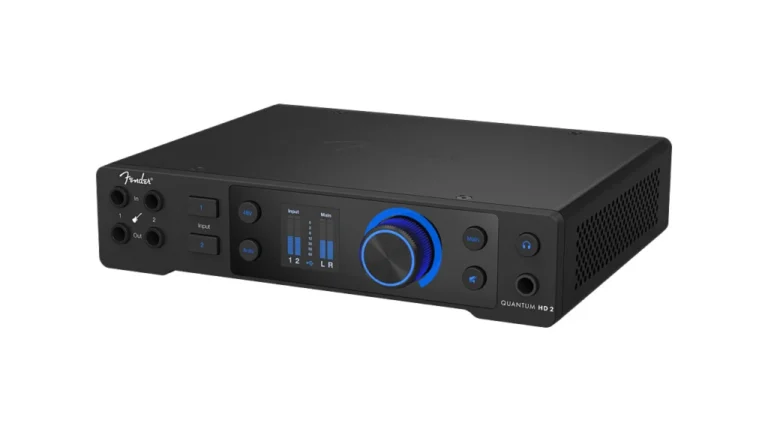
Fender Quantum HD2

AVAILABLE

Fender Quantum HD2

Quantum HD 8: The flagship model with eight preamps, 26 inputs, and 30 outputs. Priced at $1,099.99, it competes directly with the SSL 18 and positions Fender as a serious player in the professional interface market.
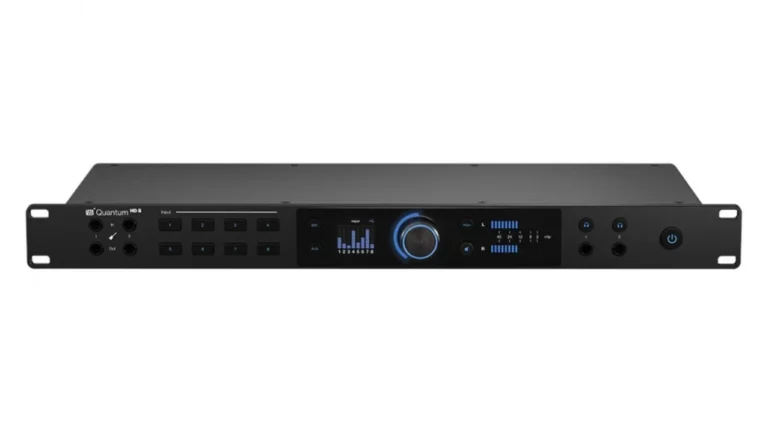
Fender Quantum HD8

AVAILABLE

Fender Quantum HD8

AudioBox Go: Ultra-Portable Recording
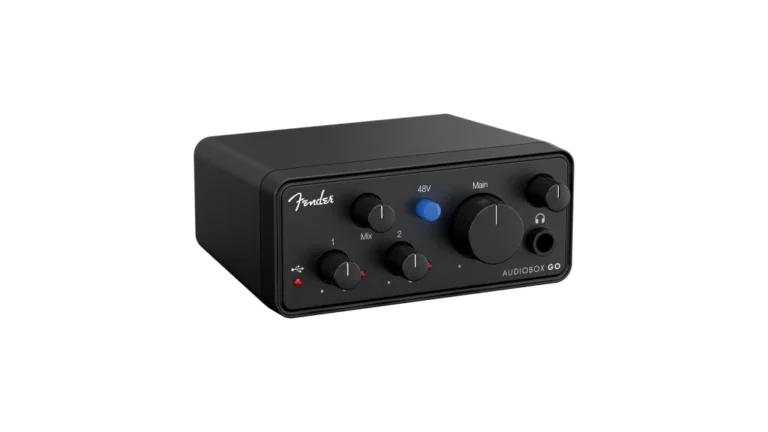
For musicians who need recording capability anywhere, the AudioBox Go delivers 2-in/2-out functionality at just $99.99. Running at 24-bit/96kHz, it’s clearly aimed at mobile content creators and songwriters who prioritize portability over maximum specifications.
Fender AudioBox GO audio interface on a white background

AVAILABLE

Fender AudioBox GO

Why This Matters

Fender’s entry represents a significant market shift. They’re leveraging PreSonus’s proven audio engineering while adding Fender’s massive distribution network and brand recognition. The bundled Fender Studio Pro software (formerly Studio One) sweetens the deal for new buyers entering the ecosystem.

For existing PreSonus users, this transition means continued support with potentially better retail availability. For everyone else, it means more competition in a market that benefits from companies pushing each other to innovate.

Steinberg IXO Series: Streamlined Entry Points

Steinberg is showcasing their IXO series at NAMM 2026, targeting creators who want reliable performance without complexity.
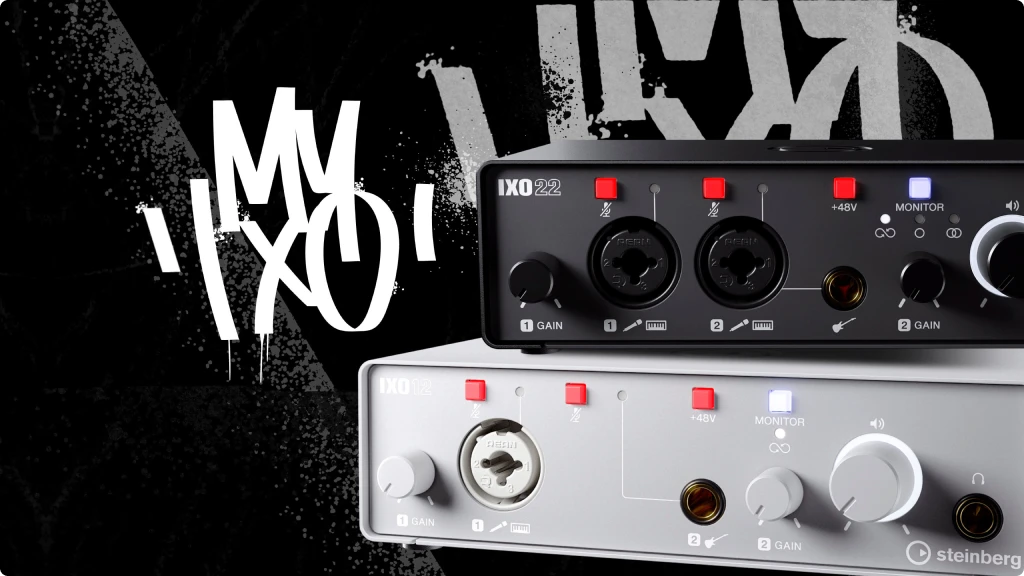
Steinberg IXO Series

The Lineup

IXO12: Single preamp design at $120. Perfect for solo podcasters or singer-songwriters who record one source at a time.

IXO22: Two preamps at $170. Handles the most common recording scenarios—vocals plus guitar, or stereo instruments.

Both models share core specifications: 24-bit/192kHz conversion, USB-C connectivity, and class-compliant operation (meaning they work without drivers on Mac, Windows, and iOS). The built-in loopback feature addresses the streaming crowd directly, letting you mix system audio with microphone input for live broadcasts.

Recording Pack Bundle

Steinberg also offers an IXO Recording Pack that bundles the interface with a microphone and headphones—a complete starter kit for new recordists.

The Steinberg Advantage

What sets Steinberg apart is their software integration. These interfaces work seamlessly with Cubase, and the included software bundles provide genuinely useful tools rather than demo versions with limited functionality.

For someone choosing between similarly-priced options, the Steinberg ecosystem and legendary driver stability deserve consideration.

Black Lion Audio MIDI Eight: Solving the MIDI Mess

Black Lion Audio announced the MIDI Eight at NAMM 2026, and it addresses a problem that’s been plaguing studios for decades: managing multiple MIDI devices reliably.
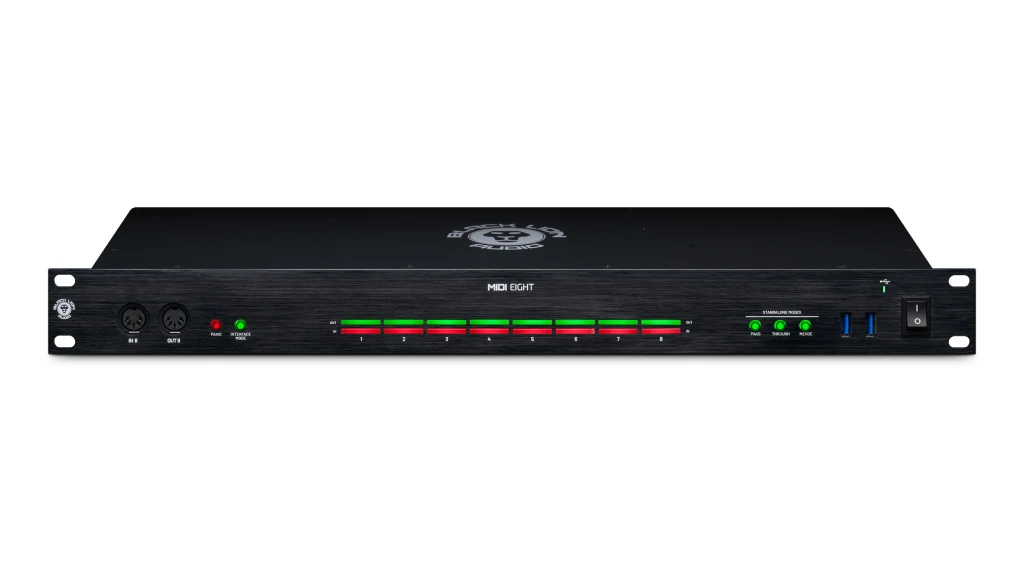
Black Lion Audio MIDI Eight

What It Does

The MIDI Eight is an 8×8 MIDI interface in a rack-mountable format. Eight MIDI inputs, eight MIDI outputs, all accessible from your computer via USB. Priced at $349 with shipping expected mid-February 2026.

Key Features

Class-Compliant Operation: Works with macOS, Windows, and iOS without installing drivers. Plug in and go.

Built-in USB Hub: Five USB ports on the back let you connect additional devices without cluttering your desk with another hub.

Standalone Modes: Here’s where it gets interesting. The MIDI Eight offers three standalone modes—Pass, Thru, and Merge—that work without a computer connected. You can route MIDI between hardware synths and controllers even when your DAW isn’t running.

Panic Button: Every synthesist knows the terror of stuck notes. The front-panel panic button sends all-notes-off messages instantly.

Flexible Power: PoE (Power over Ethernet) or DC power options mean you can integrate this into professional installations or use it on a crowded desktop.

Who Needs This

If you’re running hardware synthesizers, drum machines, or external MIDI controllers, the MIDI Eight solves real problems. Modern interfaces often include basic MIDI I/O, but managing more than a few devices requires dedicated hardware.

For studios integrating vintage gear, modular systems, or multiple hardware instruments, this fills an important gap in Black Lion’s lineup.

Universal Audio: Studio to Stage

Universal Audio’s NAMM 2026 presence focuses heavily on their “Studio to Stage” initiative—bringing UAD plugin processing into live performance environments.

Apollo E-Series Expansion

UA is pushing two products that extend their ecosystem beyond traditional studio recording:

Apollo e1x: A remote-controlled Unison preamp designed for stage use. This lets performers access UA’s acclaimed preamp emulations during live shows, with control happening over Dante networks rather than requiring someone at the unit.
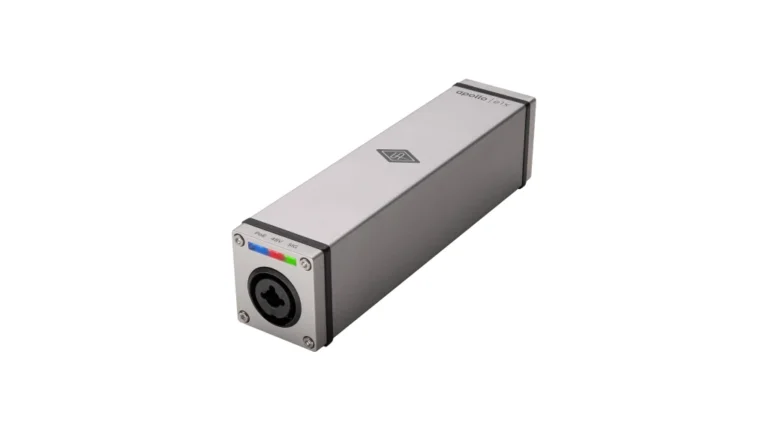
Universal Audio Apollo e1x

AVAILABLE

Universal Audio Apollo e1x

Apollo e2m: A stereo headphone amplifier and line-level interface, also Dante-enabled. This serves as the monitoring endpoint for performers using the e1x or integrating with larger Dante-based systems.
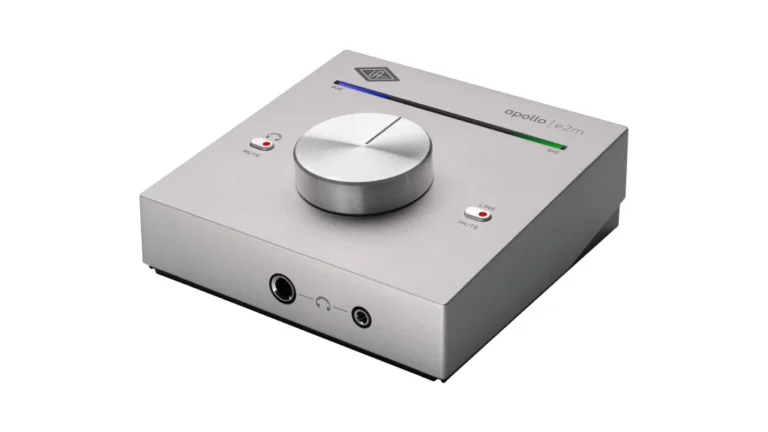
Universal Audio Apollo e2m

AVAILABLE

Universal Audio Apollo e2m

Both units use Power over Ethernet and mount on microphone stands, making them practical for live deployment.

The Bigger Picture

When paired with an Apollo x16D (the Dante-enabled version of their flagship interface), these units create a complete ecosystem for taking studio-quality UAD processing on the road. Imagine tracking vocals through a UA 1176 emulation during a live performance, or using their Neve preamp models for broadcast applications.

This “Studio to Stage” approach represents UA’s recognition that modern professionals need consistent sound quality across recording, mixing, and live contexts. The Dante connectivity ensures professional-grade reliability and integration with existing live sound infrastructure.

For studios already invested in the UAD ecosystem, these products mean your plugin licenses and presets translate directly to live work without compromise.

Audient ORIA Mini: Room Correction Goes Compact

Audient is showcasing the ORIA Mini at NAMM 2026—their compact room correction solution that launched in las year. This represents Audient’s push into monitor management territory.
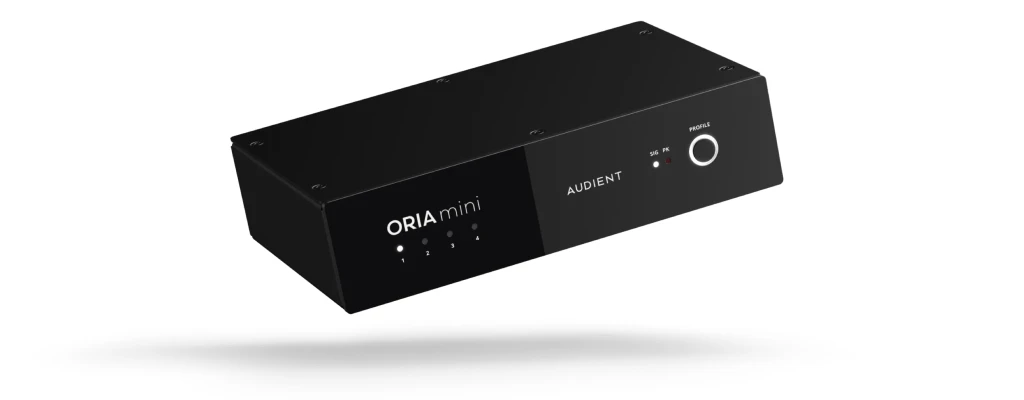
Audient ORIA Mini

The Concept

The ORIA Mini integrates Sonarworks SoundID Reference technology directly into hardware. You measure your room, create a correction profile, and the ORIA Mini applies that correction in real-time without taxing your CPU.
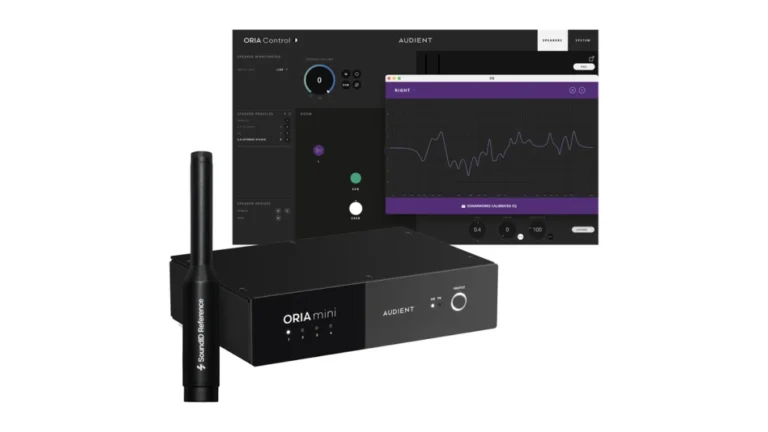
Audient ORIA Mini

AVAILABLE

Audient ORIA Mini Bundle

Technical Highlights

2.1 Channel Support: Handles stereo monitors plus a subwoofer, covering most home studio configurations.

32-bit Converters: 127dB of dynamic range ensures the correction processing doesn’t compromise audio quality.

Hardware DSP: The correction runs on dedicated processing, meaning zero latency and no CPU load regardless of what your computer is doing.

Four Profile Slots: Store different correction curves and switch between them instantly—useful if you move between different monitoring setups or want to compare corrected versus flat response.

S/PDIF Input: Accept digital sources directly without additional conversion.

Why It Matters

Room correction has become essential for home studio mixing. Products like the ORIA Mini make this technology accessible without requiring plugin-based solutions that add latency and consume CPU resources. Paired with Audient’s reputation for quality preamps and converters, this positions them well against UA’s Apollo Monitor Correction feature.

Electro-Harmonix Effects Interface: Hardware Plugin Revolution

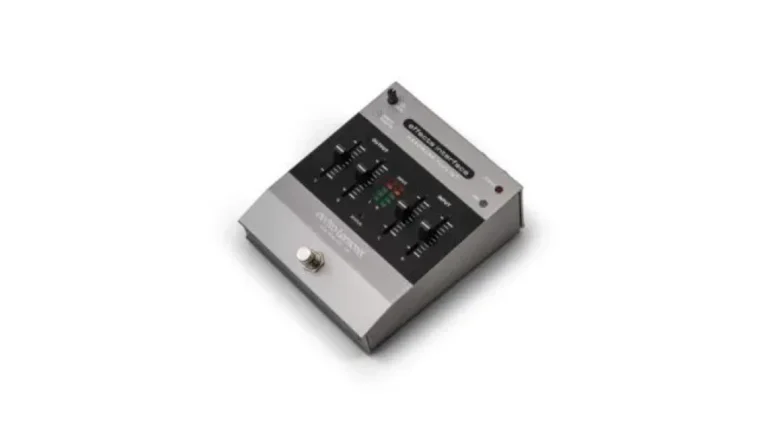
Perhaps the most intriguing announcement came on January 12, 2026, when Electro-Harmonix officially unveiled their Effects Interface Hardware Plugin. Priced at $359, this stompbox-format device bridges the gap between DAW production and physical pedal effects in ways we haven’t seen before.
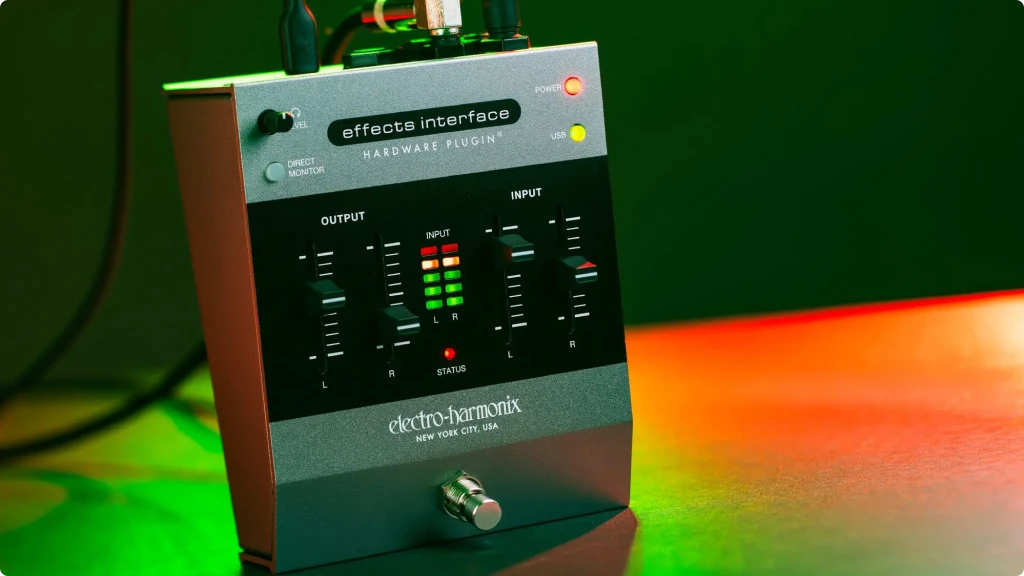
Electro-Harmonix Effects Interface

Three Operating Modes

Hardware Plugin Mode: Send audio from your DAW through physical effects pedals, then back into your session. Your analog distortion, vintage delay, or boutique reverb becomes available as an insert effect with automatic latency compensation.

Pedalboard Mode: Flip the concept—use software plugins as if they were physical pedals in your signal chain. Your guitar or bass signal passes through the interface, gets processed by plugins, and returns to your amp or PA.

Audio Interface Mode: Functions as a standard 2-in/2-out USB-C audio interface when you don’t need the specialized routing.

Electro-Harmonix Effects InterfaceElectro-Harmonix Effects Interface

AVAILABLE

EH Effects Interface

Technical Details

The Effects Interface includes stereo inputs and outputs with adjustable levels, a headphone output for monitoring, and a footswitch for hands-free operation. The included VST3/AU/AAX plugin wrapper handles latency compensation automatically, so your recorded tracks stay aligned regardless of how much outboard gear you’re using.

Why Guitarists and Bassists Should Care

This solves a workflow problem that’s frustrated recording musicians for years. You want to use your carefully-curated pedal collection on recorded tracks, but re-amping is tedious and latency compensation is a headache.

The EHX Effects Interface makes the process transparent. Insert it on a track, route through your pedals, and record the results. The plugin wrapper handles the timing math.

For bass players especially, this opens up creative possibilities. Run your recorded DI through your favorite overdrive pedal during mixing. Add your analog chorus to a synth track. Use that vintage flanger you love without committing during tracking.

At $359, it’s positioned as a serious tool rather than a toy—and knowing EHX’s reputation for rugged, practical designs, it should handle real-world studio abuse.

Why NAMM 2026 Matters for Your Studio

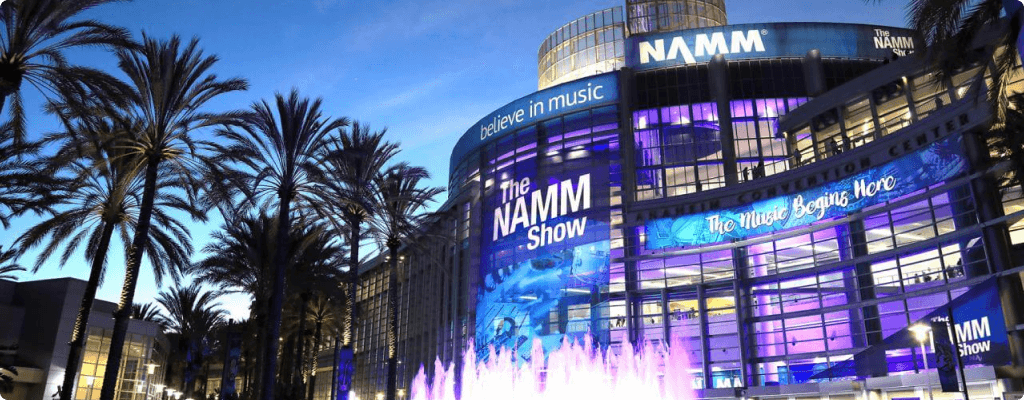
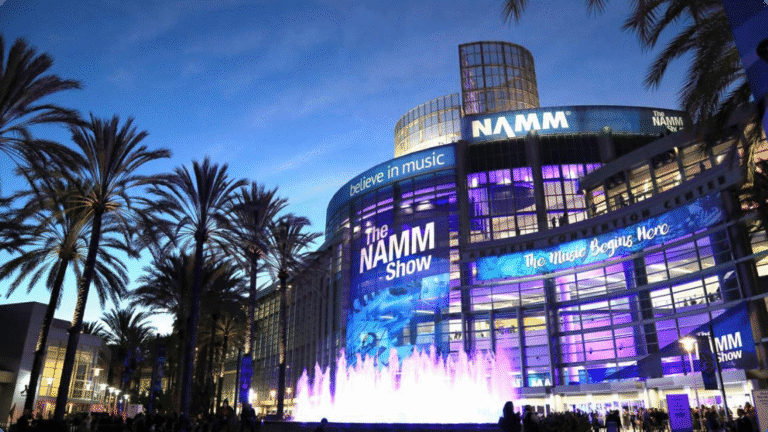
Walking into the Anaheim Convention Center during NAMM 2026 feels different this year. The air buzzes with something beyond the usual new-product excitement. This year, from January 22-24, the show is fundamentally reshaping how we think about audio interfaces.


I’ve been tracking audio interface releases for years, and NAMM 2026 marks a turning point. The traditional “converter box” concept is dying. In its place, manufacturers are building complete recording ecosystems—devices that handle conversion, analog processing, monitor management, and even room correction in single units.

For home studio owners, this shift matters enormously. Instead of buying five separate pieces of gear, you’re getting integrated solutions that actually talk to each other. The impact on workflow is massive, and your wallet will notice the difference too.

The NAMM Show 2026 showcases this evolution perfectly. SSL and Harrison (now sister companies under Audiotonix) are leading the charge with hybrid designs that blur the line between digital convenience and analog warmth. Universal Audio continues refining their DSP-powered approach with smarter software integration. Even Focusrite is proving that sometimes the best innovation is perfecting what already works.

Let me break down everything you need to know about this year’s releases, what they mean for your studio, and which ones deserve your attention.

The Hybrid Studio Revolution at NAMM 2026

The biggest trend at NAMM 2026 isn’t about sample rates or converter specs. It’s about integration. Manufacturers finally understand that modern producers don’t want to cable together ten different boxes. We want streamlined workflows that preserve analog character without the complexity.

This “hybrid studio” concept manifests in several ways. Some interfaces now include 500-series slots for analog processors. Others integrate monitor controllers with speaker calibration. A few even combine summing mixers with digital converters.

 The thinking makes sense. Your audio interface already sits at the center of your signal path. Why not make it do more? Instead of routing through external gear, patch bays, and multiple conversion stages, everything happens in one device.


Harrison and SSL are pushing this approach hardest. Both companies come from large-format console backgrounds, so they understand integrated workflows. They’re not just building interfaces—they’re building miniature console centers for project studios.


This trend benefits bassists and guitarists particularly well. Having analog processing right in your interface means you can record through real preamps and compressors without latency. The tone shaping happens before conversion, just like it would in a traditional studio.

Harrison D510 System: The Game-Changer
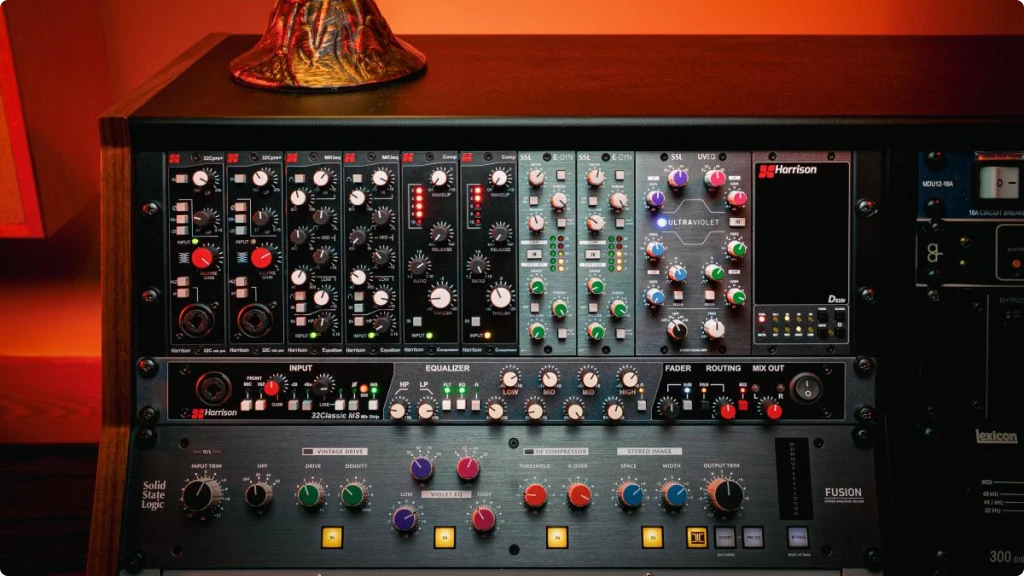
Harrison Audio D510 Close up

The Harrison D510 500 Series System might be the most important audio interface debut at NAMM 2026. I’m not exaggerating. This thing fundamentally changes how you can build a recording rig.

What Makes It Different

Here’s the concept: a 10-slot 500-series rack that also functions as a USB audio interface. You fill it with your favorite preamps, compressors, and EQs. Then the D510ua module captures everything digitally and sends it straight to your DAW via USB-C or ADAT.


No separate interface needed. No extra cabling. No additional conversion stages. Your 500-series modules become your interface.

The Technical Details

The D510 System consists of several components working together:


  • D510r Rack: The main 10-slot 500-series chassis with high-current power supply. Unlike budget racks, this provides clean, stable power for demanding modules.
  • D510ua USB-Audio & ADAT Interface Module: This slots into one of the 10 positions. It provides USB-C connectivity for direct DAW recording and includes ADAT I/O for expansion. Sample rates reach 192 kHz with 32-bit conversion.
  • D510mx 10×2 Analog Summing Mixer: An optional module that lets you sum multiple channels through analog circuitry before hitting the converters. This adds the subtle harmonic coloration that makes mixes feel more cohesive.
  • D510Dante Module: For studios running networked audio, this enables AoIP connectivity alongside the USB option.

Why Bass Players Should Care

If you record bass frequently, this system opens up possibilities that weren’t practical before. You can slot in a high-end 500-series preamp—maybe something with transformer color like a Neve-style module—and record direct-to-DAW with zero latency.

The signal path looks like this: Bass → D510 preamp module → D510ua converter → USB → DAW. Clean, simple, professional. No need to run through a separate DI box, then into a standalone interface, then worry about impedance matching.


For metal and rock where bass tone is critical, having access to real analog iron in your recording chain makes a noticeable difference. Amp simulators work better when you feed them a signal that’s already been shaped by real transformers and tubes.

The Harrison Sound

Harrison consoles recorded some of history’s most important albums. Michael Jackson’s “Thriller” went through a Harrison. So did countless rock and R&B records from the ’80s and ’90s.


The D510 brings that sonic signature into a modular format. Harrison’s own 500-series modules (the 32cPre+, Comp, and Mr3eq) deliver that same smooth, musical character. They don’t sound clinical or sterile. There’s weight and presence to the sound.

Pricing and Availability

Harrison hasn’t announced final pricing yet, but expect the complete D510r rack to start around $1,500-2,000. The D510ua interface module will likely add another $800-1,200. Individual Harrison 500-series modules range from $500-700 each.

This positions it firmly in the serious home studio category. You’re not buying your first interface. You’re building a professional recording front-end that can grow as your needs expand.

SSL 18: Rackmount Power for Project Studios

SSL 18 Audio Interface front view

The SSL 18 launched at the last NAMM and has been on the market throughout the year. SSL continues featuring it prominently at NAMM 2026 alongside newer products. After several months with one, I can confirm the initial excitement was justified.

The 1U Powerhouse

SSL crammed an impressive amount of functionality into a single rack space. You get 8 SSL preamps (the same ones from their larger consoles), 26 inputs total, and 28 outputs. Everything runs at 32-bit/192 kHz.

But raw specs don’t tell the full story. The SSL 18 shines in how it brings together multiple functions that usually require separate devices.

Built-In Features That Matter

  • Eight SSL Preamps: These aren’t just “decent” preamps. They’re the real SSL sound—clean, detailed, with that signature top-end air. For recording everything from vocals to drum overheads, they perform beautifully.
  • Two Hi-Z Inputs: Front-panel instrument inputs handle bass and guitar direct recording. SSL’s “4K” analog enhancement mode adds harmonic richness similar to their famous console circuitry. For bass, this can be magical—it adds body and presence without muddying the low end.
  • Talkback Microphone: A built-in talkback mic lets you communicate with musicians in another room. Sounds simple, but this feature is incredibly useful during tracking sessions. No need to switch between your phone or use hand signals through glass.
  • Listen Mic Compressor (LMC): This is SSL’s secret weapon. Originally designed for talkback mics, engineers discovered it sounds incredible on drums. It adds aggressive, punchy compression that works particularly well on room mics or parallel compression buses.
  • Monitor Controller: Dedicated monitor outputs with source switching and dim/mono functions. You can A/B between different speaker sets and check mono compatibility without reaching for separate hardware.
  • Connectivity: ADAT I/O provides 8 additional channels in each direction. S/PDIF handles stereo digital transfers. MIDI I/O connects hardware instruments and controllers. USB-C provides the computer connection with class-compliant operation for maximum compatibility.

The SSL Production Pack Workflow

SSL bundles their interfaces with the Production Pack—a collection of plugins that model their classic console EQs, dynamics, and bus processing. These integrate seamlessly with the hardware.

Here’s what makes this combination powerful: you can track through SSL preamps with “4K” coloration, then mix using SSL channel strip plugins that match that same sonic character. Your entire production stays in the SSL universe.


For someone building a home studio, this consistency matters. You’re not mixing and matching different sonic signatures. Everything works together coherently.

Who Should Buy the SSL 18

This interface targets producers who’ve outgrown desktop units but don’t need the massive I/O count of flagship models. Eight preamps handle most recording scenarios: full drum kit (kick, snare, two toms, two overheads, room), plus bass and guitar. Or vocals, acoustic guitar, and a small ensemble.


The rackmount form factor means it lives in your desk or rack permanently. This works better than desktop interfaces if you’re frequently connecting and disconnecting cables.


Price sits around $1,299, which positions it between consumer and professional tiers. You’re paying more than a Focusrite Scarlett but less than an Apollo x8. The value proposition depends on whether you need those 8 preamps and the SSL workflow integration.

For metal and rock production specifically, the aggressive LMC compression and solid Hi-Z inputs make this a strong contender. The ability to record bass direct with 4K coloration, then crush it with LMC during mixing, covers a lot of tonal ground.

Universal Audio's Smart Monitor Integration

Universal Audio Apollo Ecosystem

Universal Audio isn’t debuting new hardware at NAMM 2026. Instead, they’re showcasing their biggest recent innovation: Apollo Monitor Correction powered by Sonarworks SoundID Reference.

The Problem This Solves

Every room has acoustic problems. Modes, reflections, and null points color what you hear through your monitors. Most people solve this with room treatment and measurement software.

The traditional approach requires running calibration software on your computer. It inserts a plugin on your DAW’s master output. This works but eats CPU resources and adds latency to your monitoring chain.

The Apollo Solution

Apollo’s Gen 2 interfaces now run Sonarworks correction directly on the interface’s DSP hardware. Zero latency. Zero CPU usage. The room correction happens before the signal reaches your speakers, completely transparent to your DAW.


Here’s the workflow: You run Sonarworks SoundID Reference measurement using a calibration mic. It analyzes your room and creates a correction profile. You load that profile into your Apollo’s Console application. From that moment forward, your monitors output corrected audio regardless of what your computer is doing.


This even works for headphone correction. The Apollo applies different profiles for different output pairs. Studio monitors get room correction. Headphones get frequency response correction. You switch between them instantly without reaching for plugins.

Why This Matters at NAMM 2026

UA is demonstrating this feature extensively at their booth. They’re comparing the same mixes through corrected and uncorrected monitoring, letting people hear the difference immediately.

For home studio owners, this represents a significant value add. You’re already buying an Apollo for its preamps and UAD plugin processing. Now it also handles your monitor correction without additional cost or complexity.


The integration showcases where the industry is heading. Audio interfaces are becoming smarter, handling tasks that previously required separate software or hardware solutions.

Current Apollo Lineup

UA’s current Gen 2 lineup at NAMM 2026 includes:


  • Apollo Twin X Gen 2: Desktop format with 2 Unison preamps. Perfect for solo recording. DUO or QUAD Core DSP options.
  • Apollo x4 Gen 2: Four preamps in a desktop package. Adds ADAT expansion.
  • Apollo x6 Gen 2: Six preamps with more I/O. Still desktop-sized.
  • Apollo x8 Gen 2: Eight preamps in rackmount format. The sweet spot for many studios.
  • Apollo x16 Gen 2: Sixteen preamps with maximum I/O. For larger production environments.
  • Apollo x8p Gen 2: Rack version focused on analog integration rather than preamps.
  • Apollo x16D: Dante-enabled version for networked audio in live sound and broadcast.


All Gen 2 models include the Monitor Correction feature, plus improved gain staging with Auto-Gain functionality. These workflow enhancements make a bigger daily difference than slightly better converters would.

Focusrite's Proven 4th Generation Lineup

Focusrite Scarlett 4th Gen Ecosystem

While other manufacturers chase exotic features, Focusrite is playing a different game at NAMM 2026. They’re showcasing their recently released 4th Generation Scarlett interfaces—and demonstrating why “best-selling interface” status isn’t an accident.

The 4th Gen Improvements

Focusrite didn’t reinvent their formula. They refined it. The 4th Generation Scarletts improve on their predecessors in focused, practical ways:

  • Better Preamps: The new preamps offer 69dB of gain range with lower noise floors. This matters for ribbon mics and quiet sources that need substantial gain.
  • Auto Gain: Press a button, play for 10 seconds, and Scarlett sets optimal levels automatically. It accounts for the interface’s dynamic range and leaves appropriate headroom. This feature alone saves enormous time during tracking.
  • Clip Safe: Automatic gain adjustment that prevents clipping. The interface monitors input levels 96,000 times per second and reduces gain if clipping is imminent. You’ll never lose a take to digital distortion again.
  • Improved Air Mode: The DSP-based Air processing now offers two modes. Presence mode brightens the top end like the classic ISA console. Harmonic Drive mode adds vintage warmth and mid-range punch. Both can transform how vocals and instruments sit in a mix.
  • Wireless Control: The Focusrite Control 2 app now works on iOS and Android. Set levels and adjust routing from anywhere in your studio without being tethered to your computer.
  • Better Headphone Amp: Redesigned output stage drives high-impedance headphones significantly louder and clearer.

The Lineup

  • Scarlett Solo 4th Gen: Single mic preamp, one Hi-Z input. The simplest entry point for solo recording.
  • Scarlett 2i2 4th Gen: Two preamps, two Hi-Z capable inputs. Still the world’s best-selling interface for good reason.
  • Scarlett 4i4 4th Gen: Four inputs (two with preamps), four outputs. Adds MIDI for connecting keyboards and controllers.
  • Scarlett 18i8 and 18i20: Higher I/O counts for larger setups. ADAT expansion, more routing flexibility.

The Anniversary Edition 2i2 in ISA blue has also been featured, celebrating Focusrite’s 40-year history with exclusive plugins.

Why These Still Matter

In a show filled with exotic hybrid interfaces and DSP-powered monsters, Focusrite’s approach seems almost boring. Two inputs, decent preamps, USB connection. What’s revolutionary about that?


Nothing. And that’s exactly the point.


Most people recording at home don’t need 16 preamps. They need two that sound good and work reliably. They don’t need 500-series slots or analog summing. They need simple recording that doesn’t fight them.


Focusrite delivers that better than anyone. The driver stability is legendary. The preamps sound clean and detailed. The build quality handles years of daily use. The workflow never surprises you.


For a bass player recording demos or a songwriter capturing ideas, this reliability is worth more than fancy features. You want to record, not troubleshoot. The Scarlett lets you focus on music.

The Value Proposition

Scarlett 2i2 4th Gen costs around $219. Scarlett 4i4 4th Gen runs about $289. These prices include everything: the interface, USB cable, comprehensive plugin bundle, and three years of warranty support.

Compare that to boutique interfaces costing three to five times more. Sure, those might sound marginally better. But they don’t sound three times better. For most recording applications, the Scarlett’s quality is more than sufficient.


The plugin bundle deserves mention too. Focusrite includes Pro Tools Intro, Ableton Live Lite, plus the Hitmaker Expansion—a curated collection of plugins from Antares, Softube, XLN Audio, and others. New buyers get legitimately useful tools without spending extra money.

Looking Back: Last Edition Releases Still Making Waves

Before diving into what’s missing at NAMM 2026, it’s worth acknowledging the significant interfaces launched at last year that continue dominating conversations. These releases set high bars that 2026 products must surpass.

SSL 18

The Established Contender

As mentioned earlier, the SSL 18 launched at the last NAMM edition and has been available throughout the year. Its eight SSL preamps, 4K analog enhancement, and integrated monitor controller established a new benchmark for rackmount interfaces under $1,500.

The interface succeeded because it brought genuine SSL console character to project studios. Not marketing hype—actual circuit designs from their large-format desks. After nearly a year on the market, it remains one of the strongest options in its category.

Audient iD48

The Insert Innovation

Audient announced the iD48 at the last NAMM, shipping in March. This 24-in/32-out rackmount interface brought something genuinely new: switchable analog inserts on all eight channels.

The innovation matters because it solves a real workflow problem. You can patch outboard compressors or EQs into your signal chain pre-conversion, then switch those same insert points to work on mixdown signals. No repatching cables. No confusion about signal routing.

The iD48 uses 32-bit ESS converters with 126.5dB of dynamic range, matching or exceeding far more expensive interfaces. Audient’s console preamps—the same circuits from their ASP8024-HE desk—provide 68dB of clean gain.

For under $1500, this represents serious value. The insert switching alone justifies the price for anyone working with analog processors.

Audient iD48 Audio Interface

Best Deal

Audient iD48

Lynx Mesa

Portable Recording

This compact Thunderbolt 3 interface targets a specific need: professional-quality recording in portable form.

The Mesa combines four combo inputs with Lynx’s legendary conversion quality. More interestingly, it includes a MicroSD card slot for standalone recording. You can capture performances directly to the card without a computer connected.

The touchscreen interface—borrowed from Lynx’s acclaimed Hilo 2 converter—provides intuitive control. For live recording, location work, or backup recording during critical sessions, this standalone capability is invaluable.

Lynx’s reputation for transparent, detailed conversion makes this particularly appealing. If you need genuinely accurate monitoring for mixing, Lynx delivers that better than most manufacturers.

NAMM 2026: Rumors, News & New Audio Interfaces

How to buy

Lynx Mesa

Bitwig Connect 4/12

The Hybrid Hub

Bitwig’s first hardware product launched last year, marking the DAW company’s entry into audio interfaces. The Connect 4/12 is deliberately unusual.

It’s not just an interface—it’s a bridge between software and hardware worlds. With DC-coupled inputs and outputs, it handles CV signals from modular synthesizers alongside standard audio. This makes it essential for anyone integrating Eurorack gear with their DAW.

The 360-degree touch-sensitive dial provides hands-on control over Bitwig Studio parameters. Hover your cursor over any knob or fader in the software, double-tap the hardware dial, and you’re controlling it with high resolution. The LED ring matches the color of the selected parameter, so you always know what you’re adjusting.

For Bitwig users working with hardware synthesizers, this solves major workflow headaches.

Bitwig Connect 4/12 Audio Interface

Best Deal

Bitwig Connect 4/12:

Apogee Symphony Studio

Immersive Audio Focused

Apogee’s Symphony Studio series launched in 2024 but gained significant attention last year. Available in three configurations—2×12, 8×8, and 8×16—these rackmount interfaces target immersive audio production.

The output count defines each model rather than input count. The 8×16 supports full 9.1.6 Dolby Atmos monitoring. The 2×12 handles 7.1.4 setups. For studios transitioning to immersive mixing, these provide necessary I/O with Apogee’s pristine conversion.

They include onboard DSP for room correction, speaker delay, and bass management—essential tools for Atmos mixing. The Control 2 software allows up to 16 custom monitor profiles, letting you switch between different speaker configurations instantly.

While positioned for immersive work, the Symphony Studio series also excels at traditional stereo recording and mixing. Apogee’s reputation for musical, transparent sound remains intact.

Apogee Symphony Studio audio interface front view on a white background

Best Deal

Apogee Symphony Studio

Last Edition Legacy

These five interfaces—SSL 18, Audient iD48, Lynx Mesa, Bitwig Connect 4/12, and Apogee Symphony Studio—represent different approaches to modern recording needs. SSL brought console character to project studios. Audient solved the analog integration problem. Lynx delivered portable professional quality. Bitwig bridged modular and digital worlds. Apogee embraced immersive audio.


NAMM 2026’s releases must offer similarly clear value propositions. Incremental improvements won’t cut it. The market demands genuine innovation or significantly better value.

What's Missing: RME, PreSonus, and Others

NAMM 2026 has notable absences in the audio interface world. Several major manufacturers are either skipping the show or not announcing new products.

RME's Quiet Year

RME typically maintains a low-key NAMM presence, but they’re particularly quiet this year. No new Babyface, no Fireface updates, no surprises.

This isn’t necessarily concerning. RME’s strategy has always been evolution rather than revolution. Their existing lineup—the Babyface Pro FS, Fireface UCX II, and UFX series—continues selling well based on RME’s reputation for bulletproof drivers and rock-solid stability.


The company may be waiting until later in 2026 to announce updates. Or they might be focusing on their newer Dante and AVB networking solutions rather than traditional USB/Thunderbolt interfaces.


For anyone considering RME, the current products remain excellent choices. The lack of new releases doesn’t make existing models any less capable.

PreSonus's Status

PreSonus typically uses NAMM for major announcements. This year, they’re present but quiet on audio interface news. Their Quantum and Revelator lines continue without significant updates.

The company seems to be focusing more on their StudioLive ecosystem and software integration rather than pure interface hardware. This makes sense given their broader product range and the market’s movement toward integrated solutions.

Apogee's Direction

Apogee has been transitioning toward iOS and mobile interfaces. Their Symphony Desktop and Element series remain available, but the company’s attention has shifted to products like the Duet and BOOM mic for content creators and podcasters.


At NAMM 2026, Apogee is focusing on this mobile/content creation angle rather than traditional studio interfaces. This reflects broader industry trends as much as company strategy.

The Takeaway

The absence of new products from these manufacturers doesn’t mean they’re irrelevant. It means the interface market has matured. The performance gap between budget and premium converters has narrowed significantly.

A $200 interface today delivers audio quality that would have cost $2,000 fifteen years ago. Manufacturers can’t just release “better converters” annually and expect excitement. They need genuine innovation or compelling workflow improvements.


That’s why SSL’s integration, Harrison’s modular approach, and UA’s smart features stand out at NAMM 2026. They’re not just incrementally better. They’re differently useful.

Beyond Audio Interfaces: Other NAMM 2026 Highlights

While audio interfaces dominate this guide, NAMM 2026 features several other releases worth mentioning, especially for bassists and producers.

Bass Releases That Have Me Excited

As a bassist, I need to talk about what’s happening on the instrument side of NAMM 2026. While the recording equipment is impressive, the bass guitar announcements have me genuinely excited. This year’s lineup addresses real problems that working bass players face.

The Bass Guitar Revolution at NAMM 2026

The industry is splitting into two clear directions. On one side, you have the modern technical approach—multiscale fanned frets, headless designs, and extended range instruments built for progressive metal and fusion. On the other side, there’s an elevation of vintage designs with active electronics and modern playability improvements.


Both directions matter. I play metal and rock, so low tunings and extended range capabilities are essential. But I also appreciate instruments that don’t look like science experiments on stage.

Dingwall SP1: Finally Accessible Fanned Frets

Dingwall SP1 bass guitar front view on a white background

Dingwall has been the gold standard for multiscale bass designs for years. Their custom shop instruments are incredible, but the $4,000+ price tags put them out of reach for most players. The new Dingwall SP1 (Super P Standard) changes this.

Dingwall SP1 5 bass guitar on a white background

Best Deal

Dingwall SP1 5

At approximately $2,300, this brings Dingwall’s famous fan-fret scale into production-line territory. The lighter body addresses one complaint about earlier models—they could be heavy for long sets. The custom pickups are voiced specifically for this model rather than being borrowed from higher-end instruments.


For metal players, fanned frets solve a fundamental problem. When you tune down to drop B or lower, string tension becomes an issue. Either your low strings feel floppy and undefined, or you use such heavy gauges that the upper strings feel like cables. Multiscale construction maintains proper tension across all strings by using different scale lengths—longer for the low strings, shorter for the high strings.


The result is clarity and punch that standard scale basses can’t match in low tunings. Every note remains articulate instead of turning into undefined rumble. This matters enormously when you’re playing fast technical parts in extreme tunings.


I’ve wanted a Dingwall for years. The SP1 might finally make it possible without selling organs on the black market.

Ibanez BTB Multi-Scale: Boutique Quality Meets Production

Ibanez BTB865MS bass front view

Ibanez’s BTB line has always represented their high-end offerings. Beautiful tops, premium woods, sophisticated electronics. The new BTB865MS and BTB866MS add multiscale construction to this boutique series.

Ibanez BTB865MS multiscale 5-string bass guitar, front view.
Get ready to lay down some serious grooves with this incredible Ibanez multiscale bass!

Best Deal

Ibanez BTB865MS

This is significant because Ibanez has more dealer presence than Dingwall. You can actually try these before buying, which matters when you’re spending serious money. The BTB line also has a more traditional aesthetic than some modern multiscale designs. They look professional on stage without screaming “I play djent exclusively.”


The electronics package includes Bartolini pickups (that I particularly don’t like) and a 3-band EQ with switchable midrange frequencies. This level of tonal control lets you voice the bass for different musical contexts. The same instrument can deliver massive low-end for metal rhythm work, then switch to articulate midrange punch for melodic passages.


I own a BTB605 and this is my main bass, for players who need versatility beyond extreme metal, the BTB multiscale models provide options that more specialized instruments don’t offer.

Ibanez EHB Headless: The Travel Rig Solution

Ibanez EHB605 Bass guitar front view

The Ibanez EHB600 and EHB605 expand the headless EHB series with more accessible price points. I’ll admit I was skeptical about headless basses initially. They seemed like solutions looking for problems.

Then I actually played the fretless one, the EHB1005AOM… Then I bought it and I’ll be honest, I want only headless basses now.

The weight reduction is dramatic. A full EHB feels lighter than many standard basses, but it’s not just about weight—it’s about balance. The lack of a headstock shifts the center of gravity. The entire instrument feels more controlled and responsive.

For anyone who travels to gigs, the compact size matters too. These fit in overhead compartments on planes. They take up less space in vans packed with gear. The reduced length means less chance of headstock damage during transport.

The EHB series also includes contouring that makes them surprisingly comfortable. The body carving fits against your torso naturally. Long rehearsals and recording sessions become less physically demanding.

Plus, there’s something satisfying about the aesthetic. They look purposeful and modern without being gimmicky. In progressive metal and fusion contexts, they fit the visual language perfectly.

NAMM 2026: Rumors, News & New Audio Interfaces

Recording Gear

  • Audeze LCD-S20: New closed-back planar magnetic headphones at $499. Planar bass response helps enormously when mixing low-end heavy music.
  • Audio-Technica R50x: Open-back headphones with enhanced bass response—unusual for the open-back category. Could be interesting for checking how mixes translate.
  • Genelec 8380A: A massive new main monitor for high-end studios. While not aimed at home studios, it represents the state of the art in monitoring.

Signal Processing

  • Neural DSP CorOS 3.3.0: Major update for Quad Cortex users, adding Darkglass bass processor models (Super Symmetry compressor, B7K distortion). This makes the QC significantly more useful for bass players.

  • SSL Super 9000 and Revival 4000: New channel strip processors combining SSL’s classic console circuitry with modern workflow. These are debuting alongside the SSL 18 at NAMM 2026.

Making Your Purchase Decision

With all these options at NAMM 2026, how do you choose the right interface? Let me break down the decision-making process.

Start with Your Actual Needs

How many inputs do you need simultaneously? If you’re recording yourself, two inputs handle the vast majority of situations. Adding band members or drum kits requires more.

Do you need built-in DSP processing? Universal Audio’s UAD system provides this. Most other interfaces rely on your computer’s processing power.


Do you want to integrate analog hardware? The Harrison D510 or SSL 18 make this easier. Standard interfaces require external patching.


What’s your budget? Be realistic. The fanciest interface won’t make your music better if you can’t afford decent monitors and treatment.

Consider Long-Term Value

Buy for what you’ll be doing in two years, not just today. Upgrading interfaces is expensive and annoying. Getting more capability now—even if you don’t use it immediately—often makes sense.


That said, don’t over-buy. If you’re a solo artist who occasionally records with one other person, 16 preamps are overkill. The money spent on unused channels could buy better monitors or acoustic treatment.

Workflow Matters More Than Specs

Interfaces with similar specifications can feel completely different to use. Some have intuitive controls that become second nature. Others require diving into software menus for basic functions.


If possible, watch videos or read reviews focusing on workflow rather than just specifications. How many clicks does it take to set up a headphone mix? Can you adjust gain without touching the computer? Do the drivers actually work reliably?


These practical considerations impact your daily experience far more than whether the converters hit 130dB dynamic range versus 120dB.

The Sweet Spots for Different Users

  • Beginner/Budget ($200-300): Focusrite Scarlett 4th Gen provides excellent quality and proven reliability. The interface won’t hold you back, and you can focus on learning to record.
  • Intermediate ($500-800): SSL 2+ or Apollo Twin X give you professional sound quality with room to grow. Both offer features that remain useful as your skills develop.
  • Serious Home Studio ($1,000-1,500): SSL 18, Apollo x8, or Harrison D510 System provide genuinely professional results. These interfaces can handle commercial-quality work.
  • Professional ($2,000+): High-channel-count Apollos, SSL Big Six integration, or complete Harrison 500-series systems. At this level, you’re building a facility rather than a hobby rig.

Don't Forget the Ecosystem

Audio interfaces rarely work in isolation. They connect to monitors, headphones, microphones, and instruments. Budget for the complete signal chain.


A $1,500 interface through $150 monitors will sound worse than a $500 interface through $1,000 monitors. Balanced investment across your entire system delivers better results than one expensive component surrounded by weak links.

Conclusion: The Future of Home Recording

NAMM 2026 reveals where studio technology is heading. The standalone converter box is becoming obsolete. Modern interfaces integrate processing, monitoring, and workflow features that previously required multiple devices.


This evolution benefits home studio owners tremendously. Instead of researching, purchasing, and cabling together five separate components, you buy one integrated system. Setup is simpler. Troubleshooting is easier. Results are more consistent.


The hybrid studio concept—mixing analog warmth with digital convenience—is now accessible at every price point. Whether you choose Harrison’s modular approach, SSL’s rackmount integration, UA’s DSP processing, or Focusrite’s refined simplicity, you’re getting genuinely professional capabilities.


For bass players and metal producers specifically, 2026’s offerings provide better direct recording tools than ever before. Quality Hi-Z inputs, analog coloration options, and integration with amp modeling create recording chains that rival traditional setups costing far more.

My Recommendations

If I were building a home studio today based on what I’ve seen at NAMM 2026, here’s what I’d consider:

  • For Getting Started: Focusrite Scarlett 2i2 4th Gen. It does everything well, nothing poorly, and won’t let you down.
  • For Growing Producers: SSL 18. Eight preamps handle most situations, and the SSL workflow integration provides room to grow.
  • For Serious Investment: Harrison D510 System with 3-4 quality 500-series modules. This gives you a foundation you can build on for decades.
  • For Bass-Focused Production: SSL 18 or Apollo Twin X. Both offer excellent Hi-Z inputs and coloration options that enhance direct bass recording.

The Bottom Line

The NAMM Show 2026 proves that audio interface technology continues evolving in meaningful ways. We’re past the point of arguing about converter specifications. Modern interfaces from reputable manufacturers all sound excellent.


The differentiation now happens in workflow, integration, and how well the interface fits your specific needs. There’s no single “best” interface. There’s the right interface for your situation.


Take time to consider what you actually need. Watch demonstrations. Read user experiences. Then invest in quality gear that will serve you for years.


The tools available at NAMM 2026 can deliver professional results in home environments. The limiting factor is no longer the equipment—it’s our skill, knowledge, and creativity. And that’s exactly how it should be.

FAQ

What's the biggest audio interface trend at NAMM 2026?

The hybrid studio concept is dominating NAMM 2026. Manufacturers are building audio interfaces that integrate multiple functions—conversion, analog processing, monitor control, and summing—into single units. Harrison’s D510 System combines 500-series processing with direct USB recording. SSL’s 18 includes monitor control, talkback, and specialized compression features. Universal Audio integrates room correction directly into their Apollo DSP. This trend moves away from the traditional “converter box” approach toward complete recording ecosystems that simplify workflow while maintaining professional quality. For home studio owners, this means fewer separate components to purchase, connect, and troubleshoot.

Is the Harrison D510 System worth it for bass recording?

The Harrison D510 System offers significant advantages for bass recording, particularly if you want real analog processing in your signal chain. You can slot in high-end 500-series preamps or compressors and record directly to your DAW with near-zero latency. The system eliminates the need for separate interfaces and complicated routing. For metal and rock where bass tone matters critically, having access to real transformers and analog circuitry makes a noticeable difference—amp simulators respond better to signals already shaped by quality iron. However, the investment is substantial. If you’re primarily recording with plugins and VST processors, simpler interfaces make more financial sense. The D510 shines when you’re committed to building a modular analog front-end that can grow over time.

Should I wait for new releases or buy current interfaces?

The current generation of audio interfaces from manufacturers like SSL, Universal Audio, and Focusrite delivers professional results that will remain competitive for years. Converter technology has matured significantly—meaningful improvements are now incremental rather than revolutionary. Buy based on your needs today rather than waiting for hypothetical future releases. The exception would be if you know a specific manufacturer is announcing something soon (within a month or two). Generally, delaying purchases while waiting for next-generation products means losing recording time you could be spending on making music. The best interface is the one you’re actively using to create. Unless your current gear is genuinely holding you back, focus on developing your skills with what’s available now rather than chasing the next new thing.

Best Audio Hub 20 years of experience badge
I've been recording, producing, and playing bass for over 20 years—from touring with my first band at 15 to playing progressive metal across Europe today. Through multiple albums, projects (Madness of Light, Rising Course, Roots of Ascendant, Human|Archive), and production work, I've tested audio interfaces in every scenario imaginable. At Best Audio Hub, I combine my historian background with years of hands-on music and audio experience. No marketing fluff—just honest insights from someone who's been in the trenches.

| ALSO REVIEWED

Scroll to Top